



Every post comes with the math.
Each guide pairs with a video and a calculator, so you can run your own version of every example.
-

· buy now pay later, budgeting, credit cards, debt
The buy now, pay later trap (we ran the math)
Pay in 4 for sneakers, headphones and a jacket, plus a laptop on a 12-month plan. Maya's 'interest-free' December cost about $600. The numbers from QWOS calculators, and when buy now, pay later is actually okay.
-
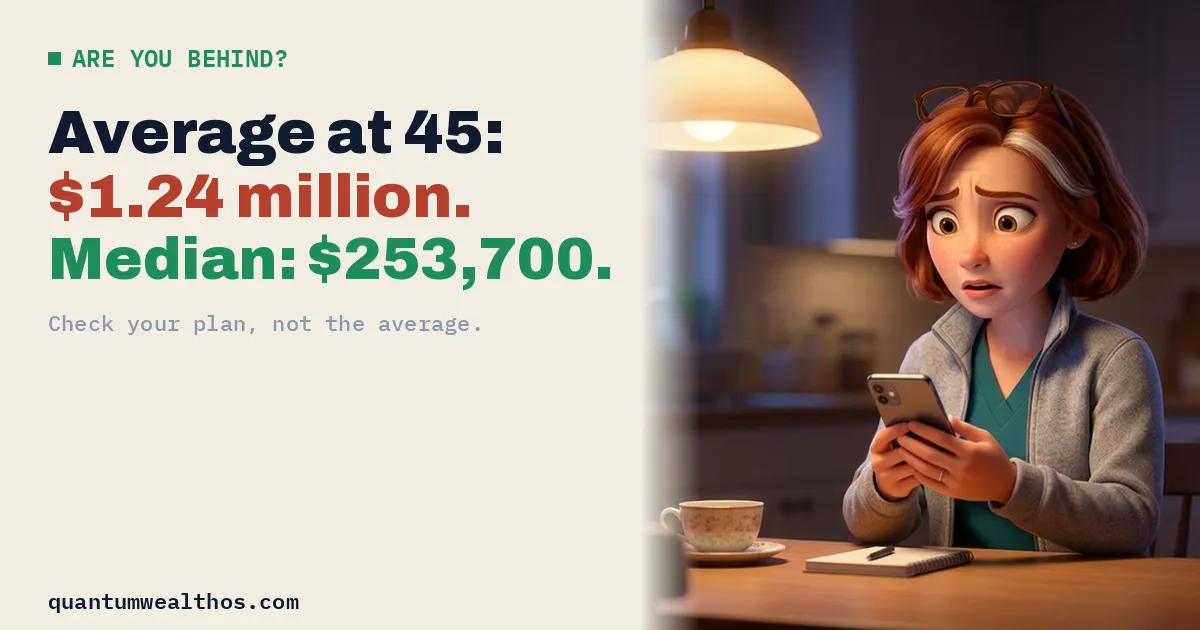
· net worth, retirement, average vs median, catch up, 401(k)
Are you behind? What the average 45-year-old has (real numbers)
Families aged 45 to 54 had an average net worth of $1,244,500 in 2025, but the median was $253,700. Denise checks the right numbers: her net worth, her momentum, and her actual retirement plan.
-
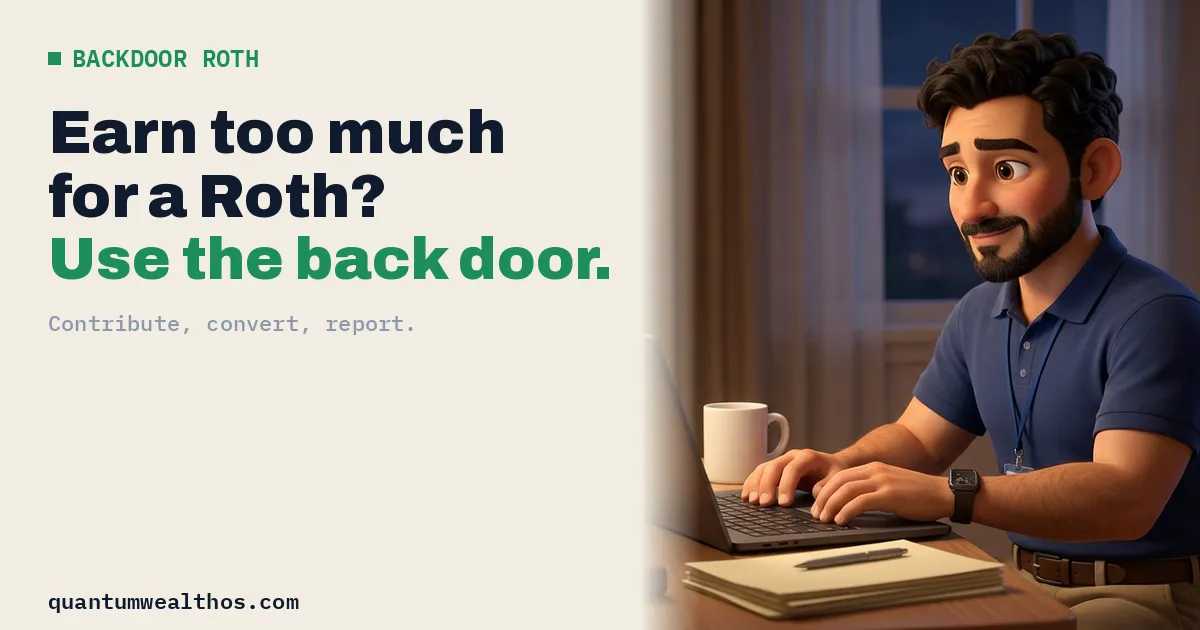
· backdoor Roth, Roth IRA, pro-rata rule, Form 8606, taxes
Earn too much for a Roth? The backdoor, step by step
The 2026 Roth IRA phases out at $153,000 to $168,000 for single filers. Conversions have no income limit. Marcus's backdoor Roth in three steps, plus the pro-rata trap, with numbers from QWOS calculators.
-

· budgeting, 401(k) match, emergency fund, Roth IRA, debt
Do this every time you get paid (the paycheck order)
Match, emergency fund, high-interest debt, Roth IRA, then the rest. Maya's paycheck order, with the numbers for each step from QWOS calculators.
-

· personal finance, emergency fund, 401(k) match, net worth, credit cards
5 signs you're doing better financially than you think (calculator check)
A cushion for surprises, the full match, saving more than 12.1%, net worth going up, and no card balance. Each sign checked with a real number from a QWOS calculator.
-
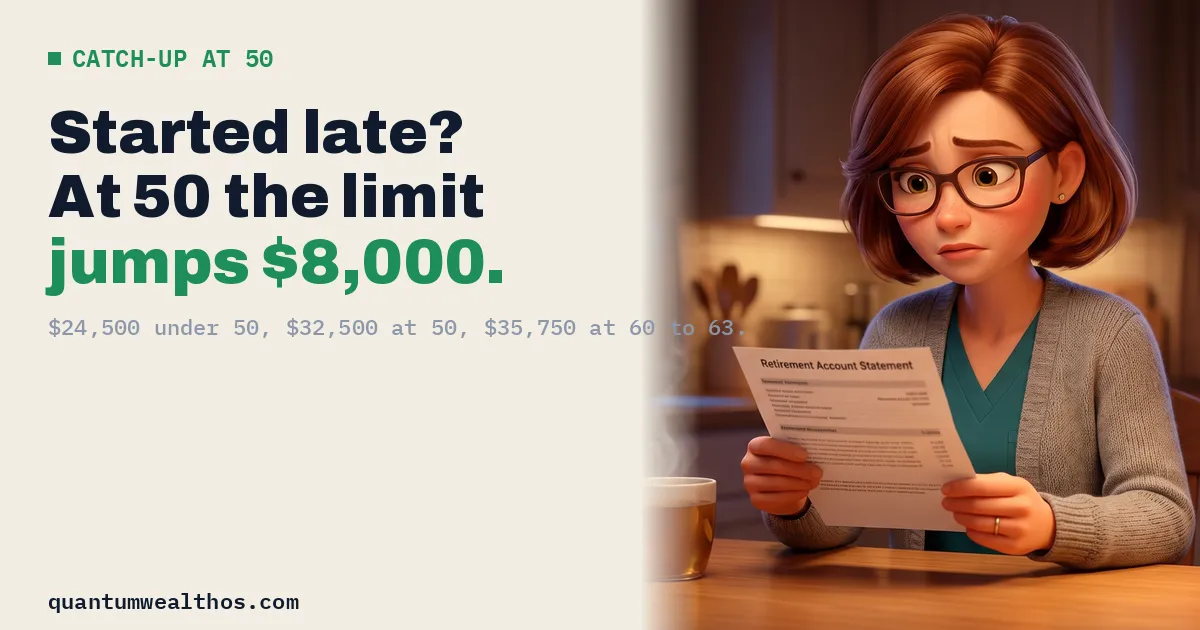
· catch-up contributions, 401(k), retirement, late start
Started late? Why everything changes at 50 (catch-up math)
At 50 the 401(k) limit jumps from $24,500 to $32,500, and to $35,750 at ages 60 to 63. Denise is 45 with $85,000 saved. Here's what the catch-up is worth, what it isn't, and the new Roth rule for 2026.
-
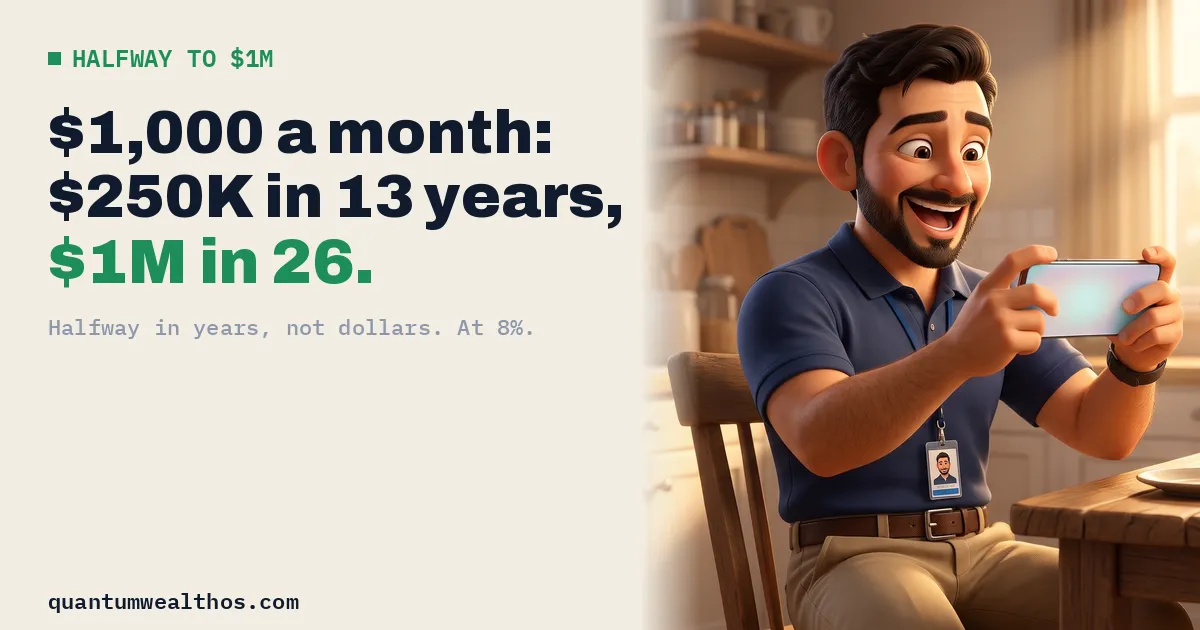
· compound interest, investing, retirement, 401(k)
Why $250K is halfway to $1 million (we ran the math)
$1,000 a month at 8% takes about 13 years to pass $250,000, then about 13 more to pass $1 million. Here's the math behind the headline, three ways to get there sooner, and the Honest Check at 6%.
-
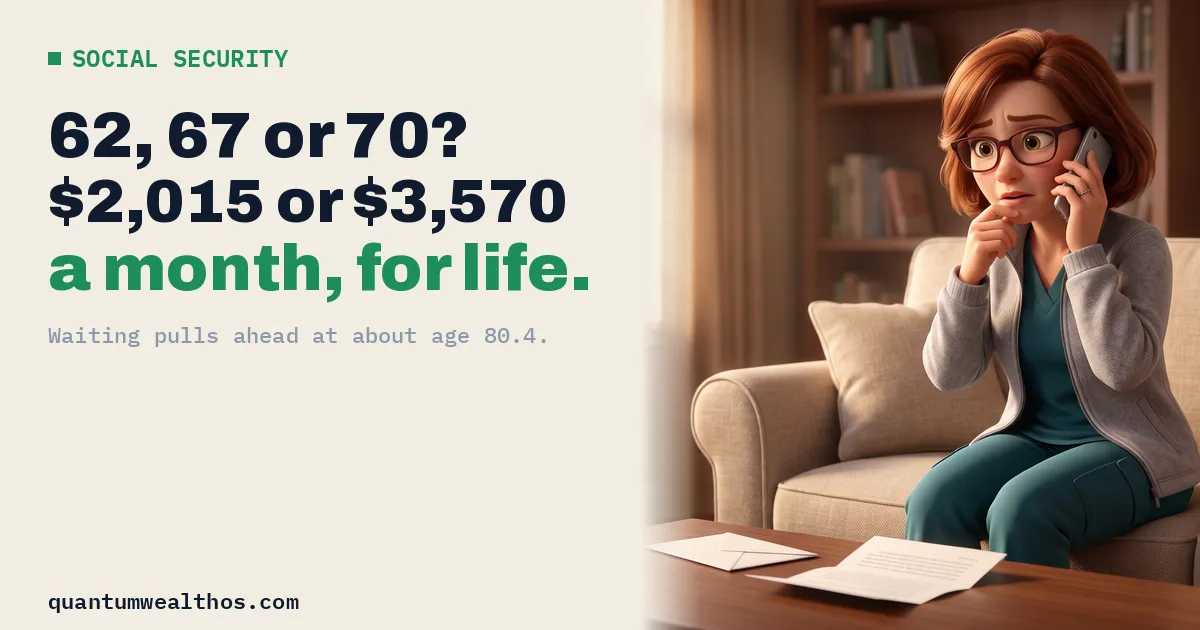
· Social Security, retirement, claiming age, taxes
When to take Social Security: 62 vs 67 vs 70
For Denise, waiting until 70 pays $1,555 a month more than claiming at 62, for life. Waiting pulls ahead in total at about age 80.4. Here's the math, the trust-fund caveat, and how benefits get taxed.
-
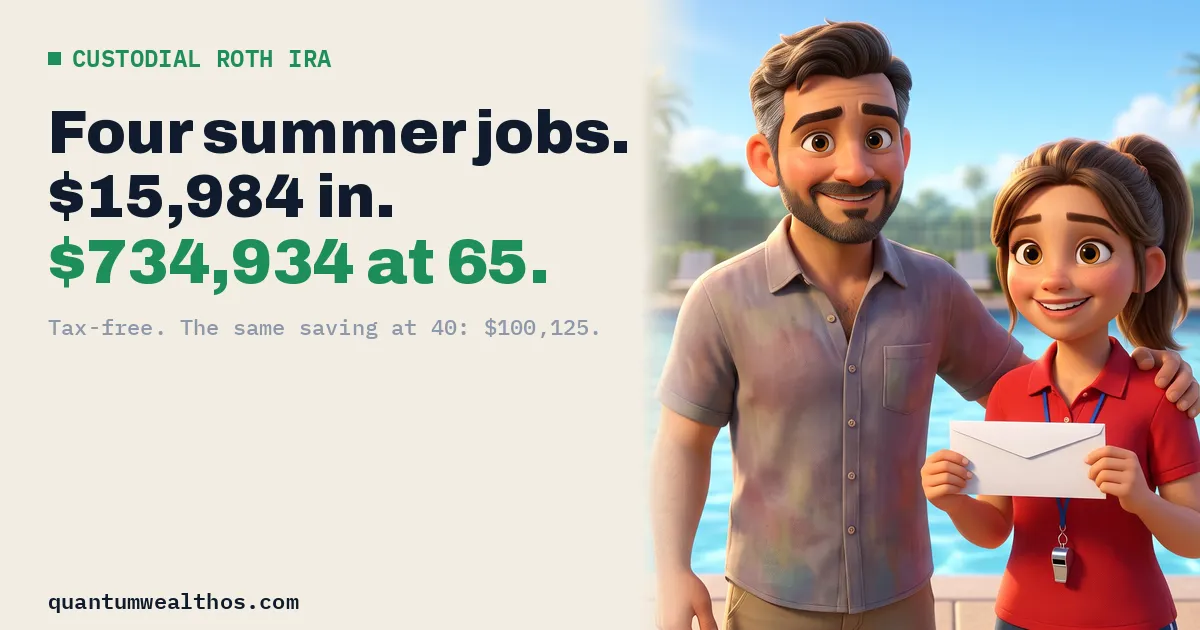
· Roth IRA, kids, custodial accounts, compound interest, taxes
Custodial Roth IRA for kids: the head start explained
Four summers of a teen's paycheck, about $16,000, can grow to $734,934 tax-free by 65 at 8%. The same saving started at 40 grows to $100,125. Here's how a custodial Roth IRA works.
-
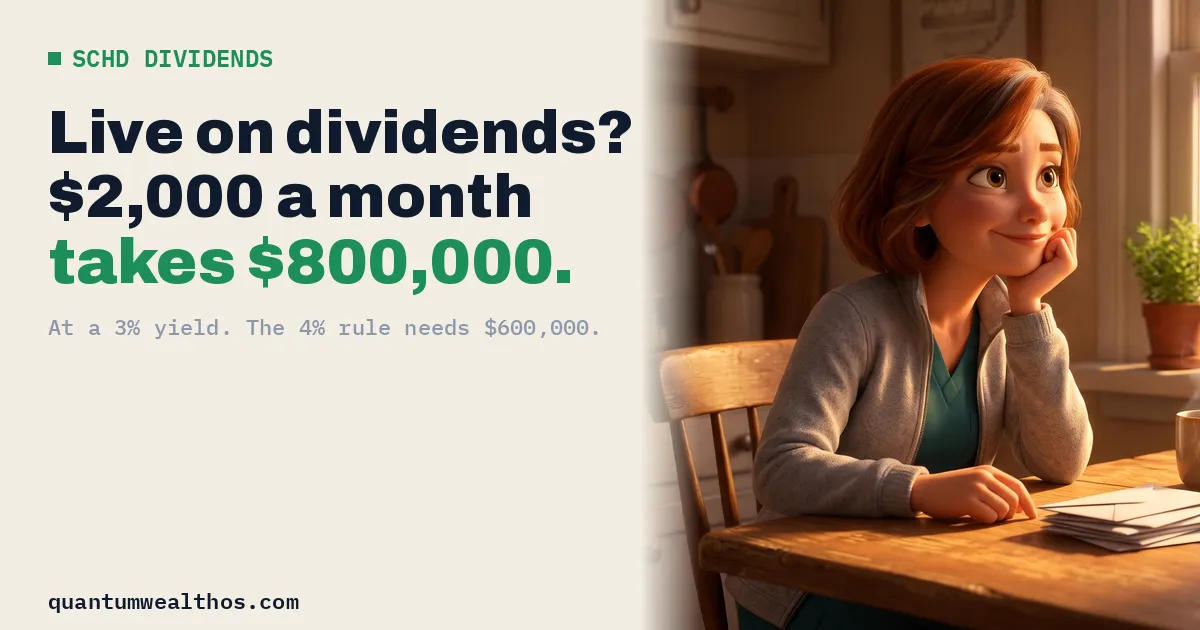
· dividends, SCHD, retirement income, ETFs, FIRE
SCHD dividend investing: can dividends pay your bills?
To cover $2,000 a month with dividends at a 3% yield, you need $800,000. Denise's $1,200-a-month plan gets there at 67, not 65. And a dividend is part of your return, not extra money.
-
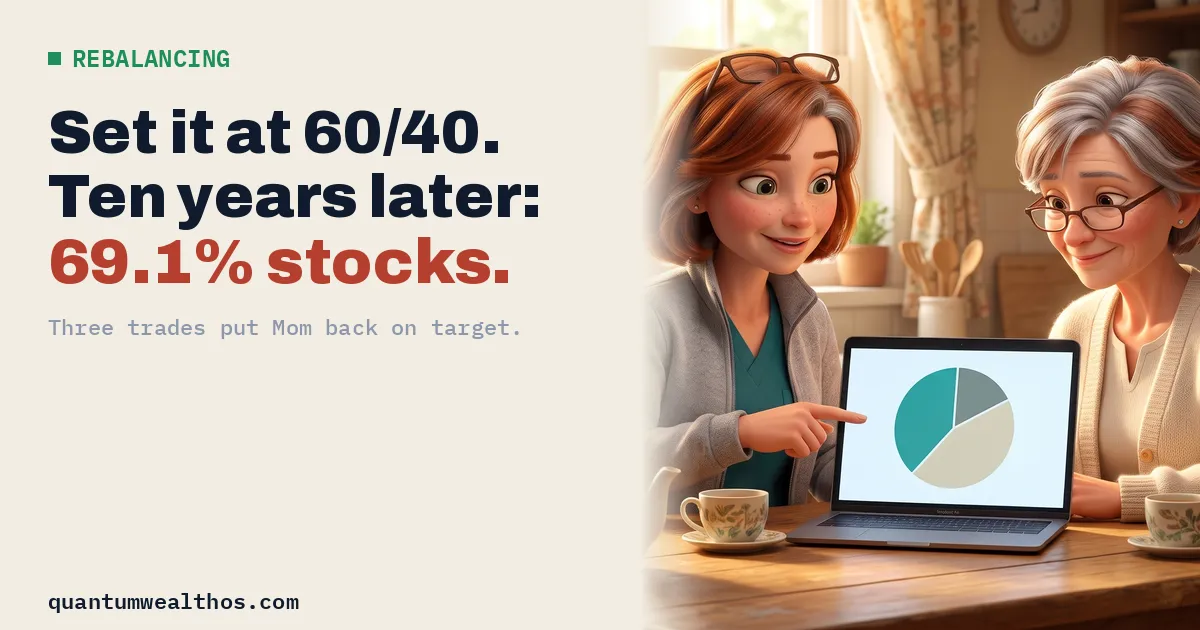
· rebalancing, asset allocation, IRA, taxes
How to rebalance your portfolio (and when)
Leave a 60/40 mix alone for 10 years at 8% and 4% and it drifts to 69.1% stocks. Denise's mom's $100,000 IRA has two funds past the 5-point line. Here's how often to rebalance and how to avoid the tax.
-
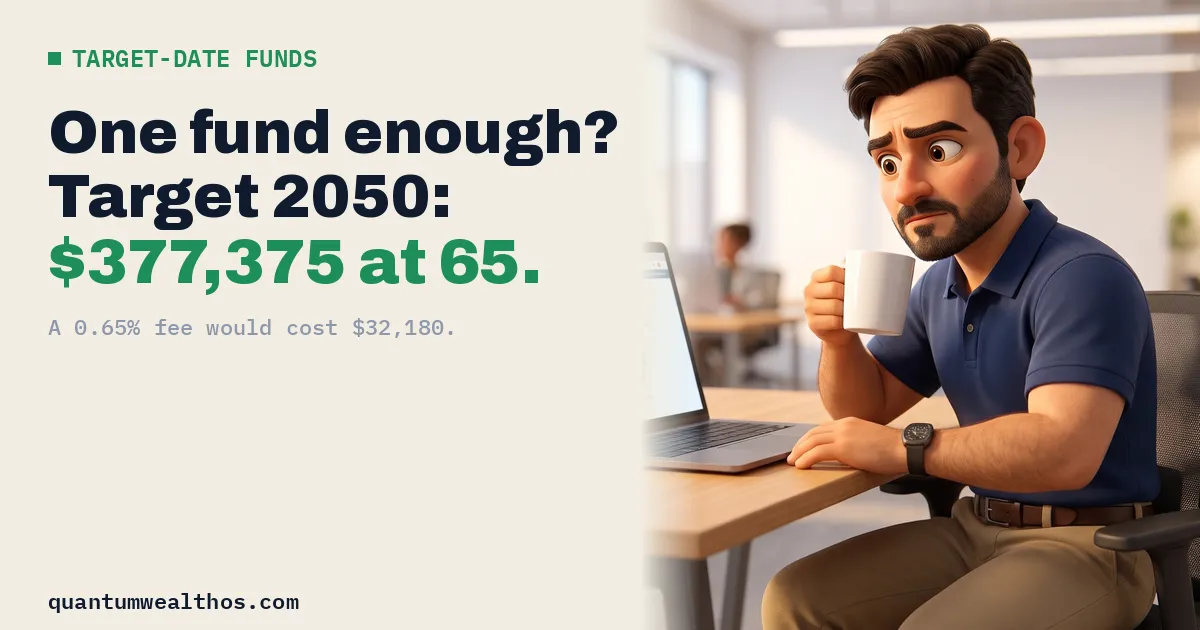
· target-date funds, 401(k), fees, investing
Target-date funds: is one fund enough?
Marcus's 401(k) put him in Target 2050. $500 a month for 25 years at 8% stocks and 4% bonds grows to $377,375. A pricier 0.65% fund would cost him $32,180. Here's how the glide path works and when one fund is enough.
-
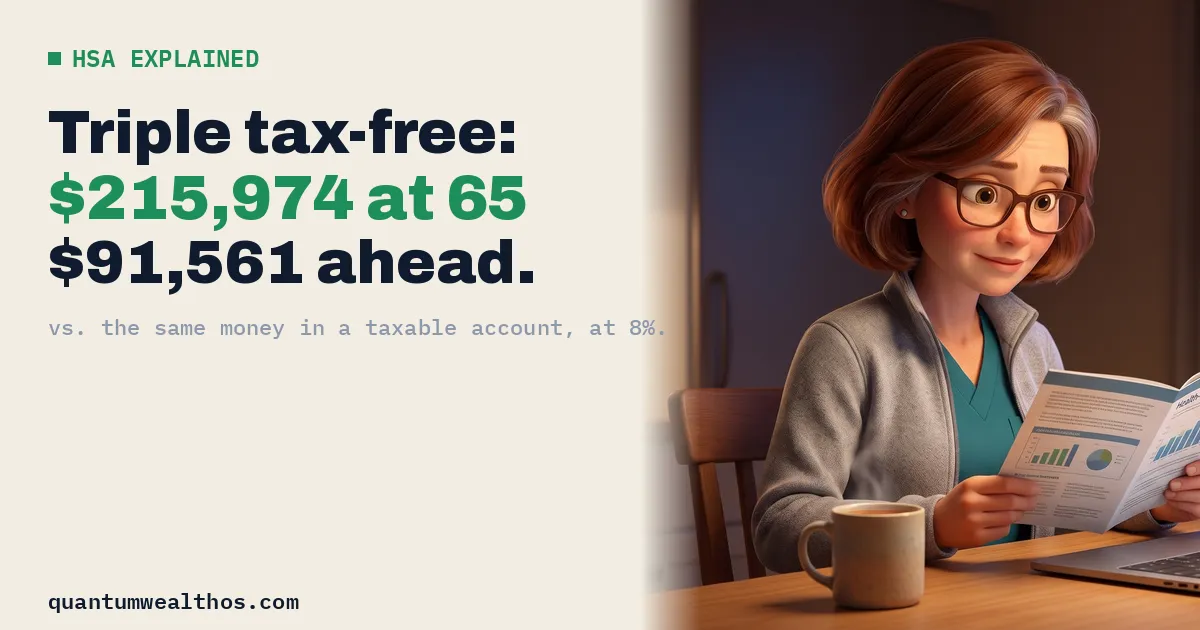
· HSA, health savings account, taxes, retirement
HSA explained: the only triple-tax-free account
Denise puts $4,400 a year into an HSA from 45 to 65. Invested at 8%, it reaches $215,974, $91,561 ahead of the same money in a taxable account. Here's how the three tax breaks work, and the catches.
-
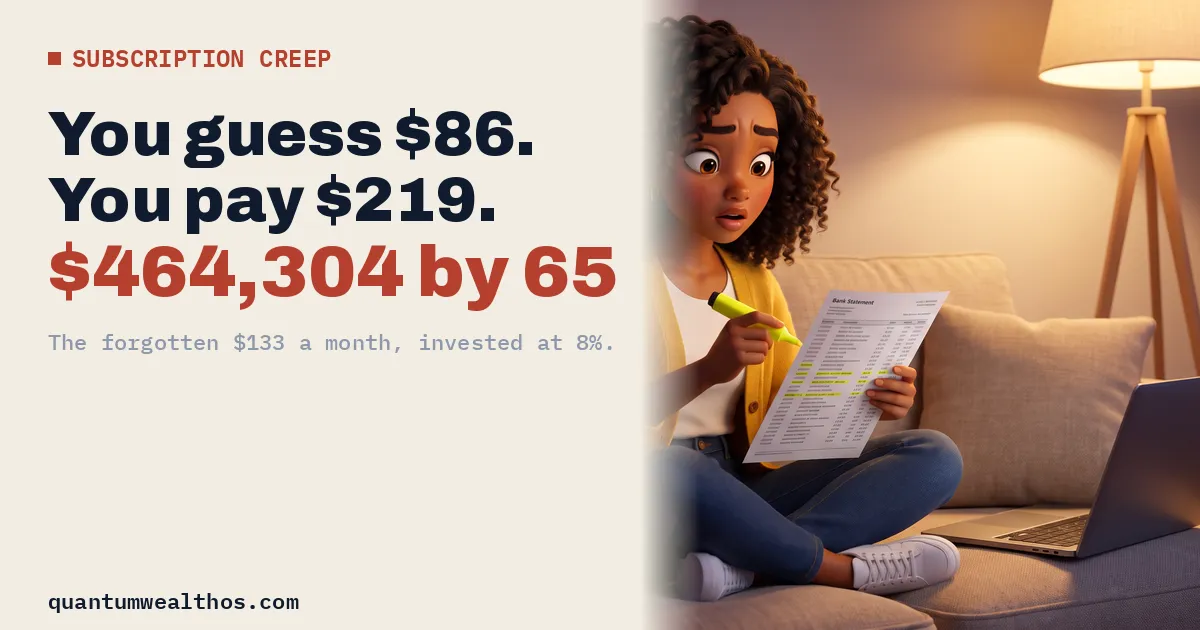
· subscriptions, budgeting, spending, compound interest
Subscription creep: what your subscriptions cost you by 65
People guess they spend $86 a month on subscriptions; the real average is $219. The forgotten $133 a month, invested from 25 to 65 at 8%, is $464,304. For Maya at 31, it's $280,176.
-
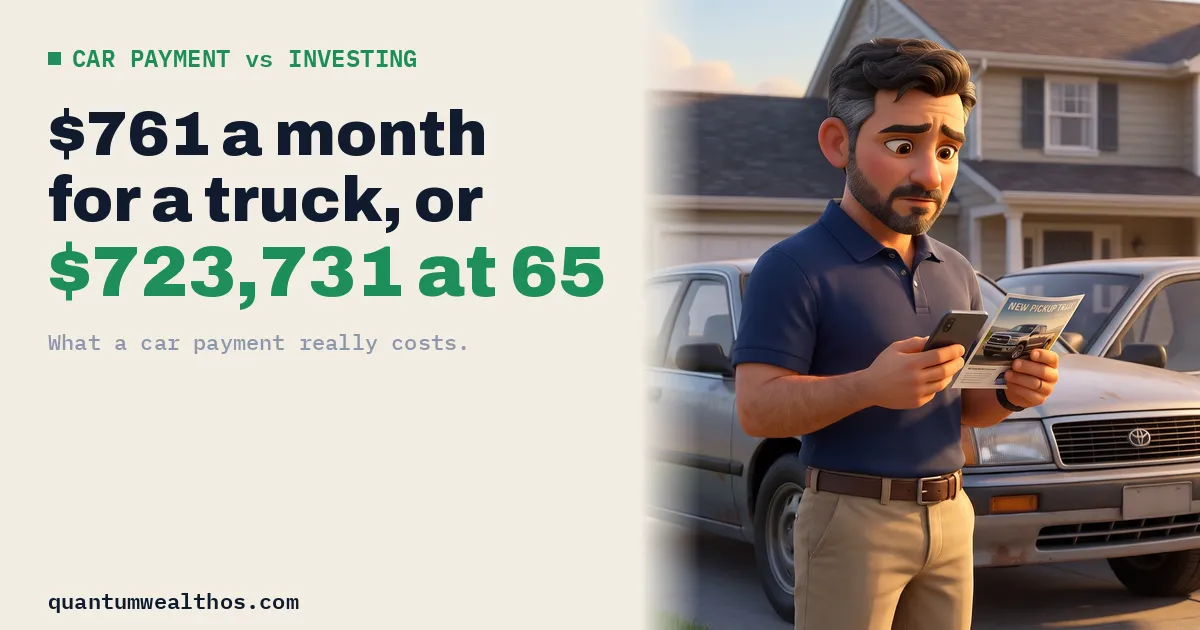
· car loan, auto loan, car payment, investing
Car payment vs investing: what your car really costs
A $44,664 truck at 7% for 72 months is $761 a month and $10,162 interest. Invested instead, $761 a month is $70,031 in six years at 8%, and $723,731 from 40 to 65.
-
· rent vs buy, home buying, mortgage, housing
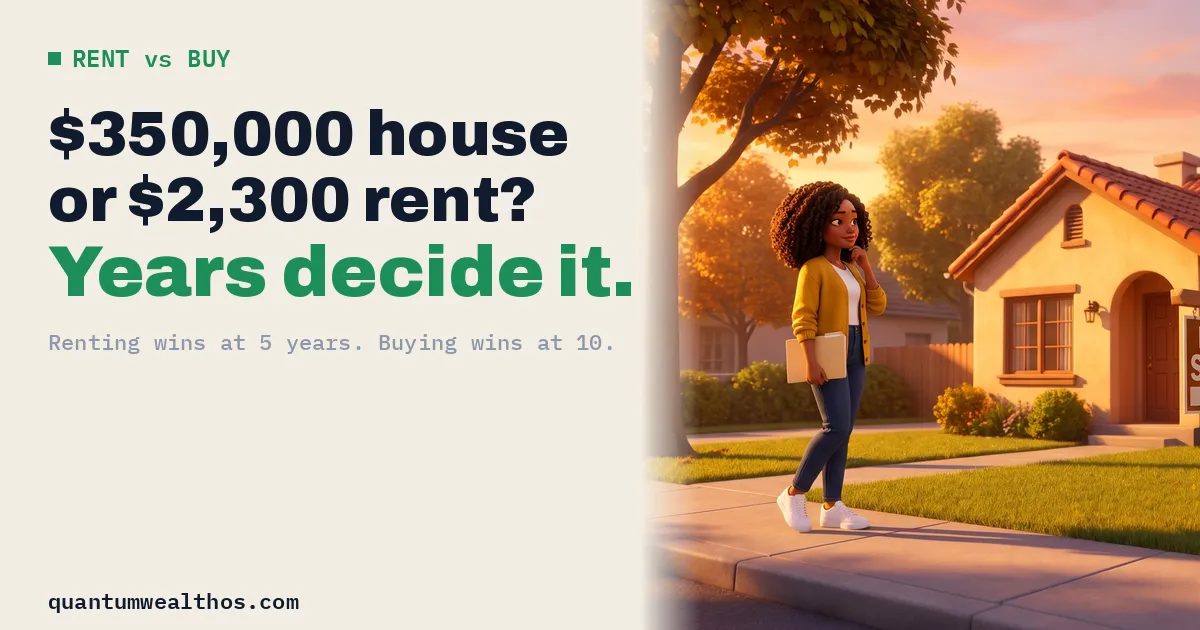
Rent vs buy a house: real math, not opinions
A $350,000 house vs $2,300 rent. At 8%, renting wins at 5 years by $18,458; buying wins at 10 years by $2,294 and at 20 years by $83,508. At 6%, buying already wins at 7 years.
-
· debt payoff, debt snowball, debt avalanche, credit cards
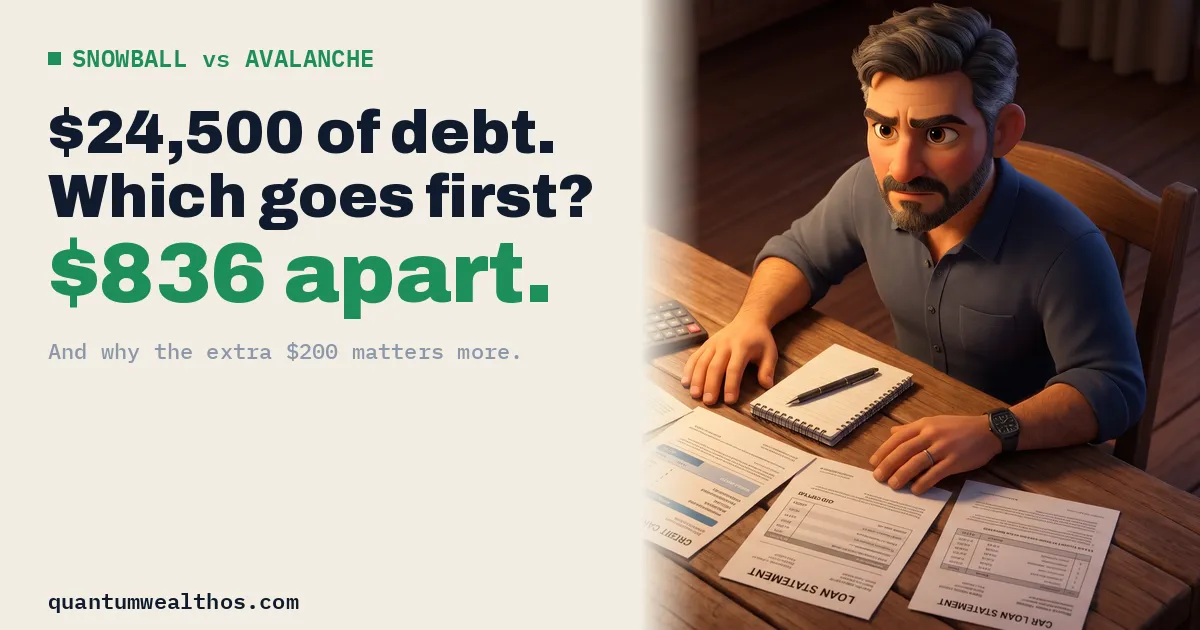
Debt snowball vs avalanche: which pays off debt faster?
Marcus owes $24,500 on four debts. With $200 extra a month, avalanche is debt-free in 2 years 7 months with $3,636 interest; snowball takes 2 years 8 months and $4,472. Without the $200, they're $9 apart.
-

· lifestyle inflation, raise, budgeting, savings rate
Lifestyle inflation: the raise you never felt
Marcus got a $15,000 raise, but his spending grew 33.3% while his pay grew 25%. That $4,000-a-year leak, as $333 a month from 40 to 65, is $316,692 at 8%. The fix: save half the raise.
-
· 401k, rollover, job change, taxes
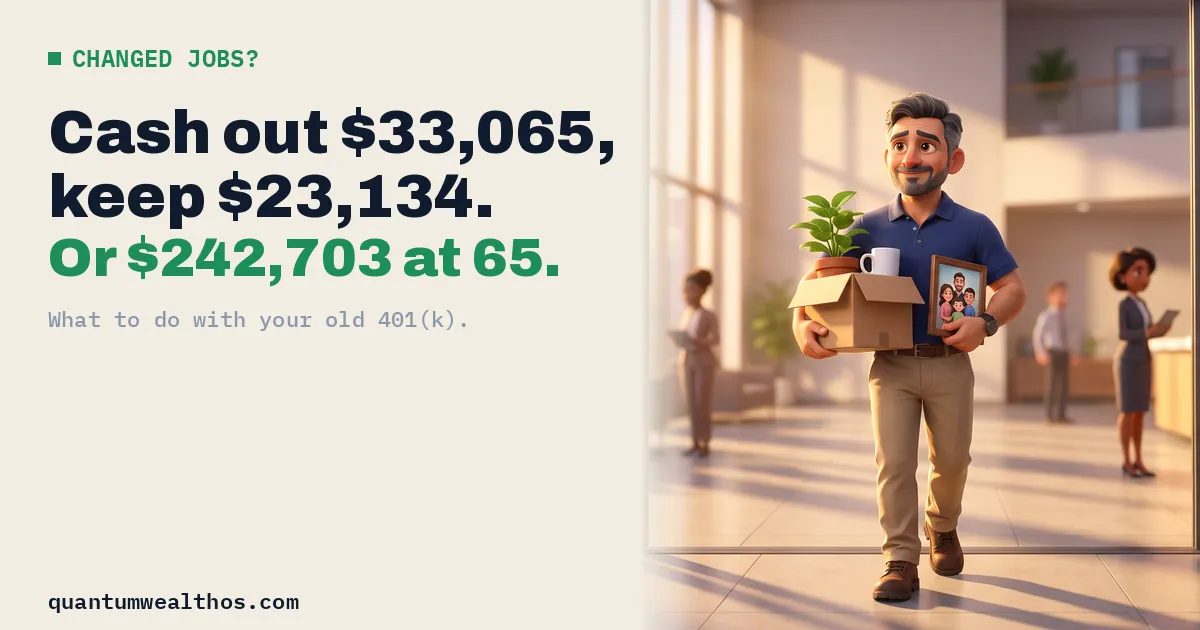
Changed jobs? What to do with your old 401(k)
Marcus, 40, left a job with $33,065 in his 401(k). Cashing out would cost $6,624 in extra federal tax plus a $3,307 penalty. Left alone at 8%, it becomes $242,703 by 65.
-

· coast fire, fire, retirement, compound interest
Coast FIRE: when can you stop saving for retirement?
Maya, 31, has $128,835 from six years of $1,400 a month. At 8% her Coast FIRE number is $125,718, so she could stop saving and still reach $1,763,768 by 65. At 6% she'd keep going until 37.
-
· 4% rule, retirement income, sequence of returns, withdrawals
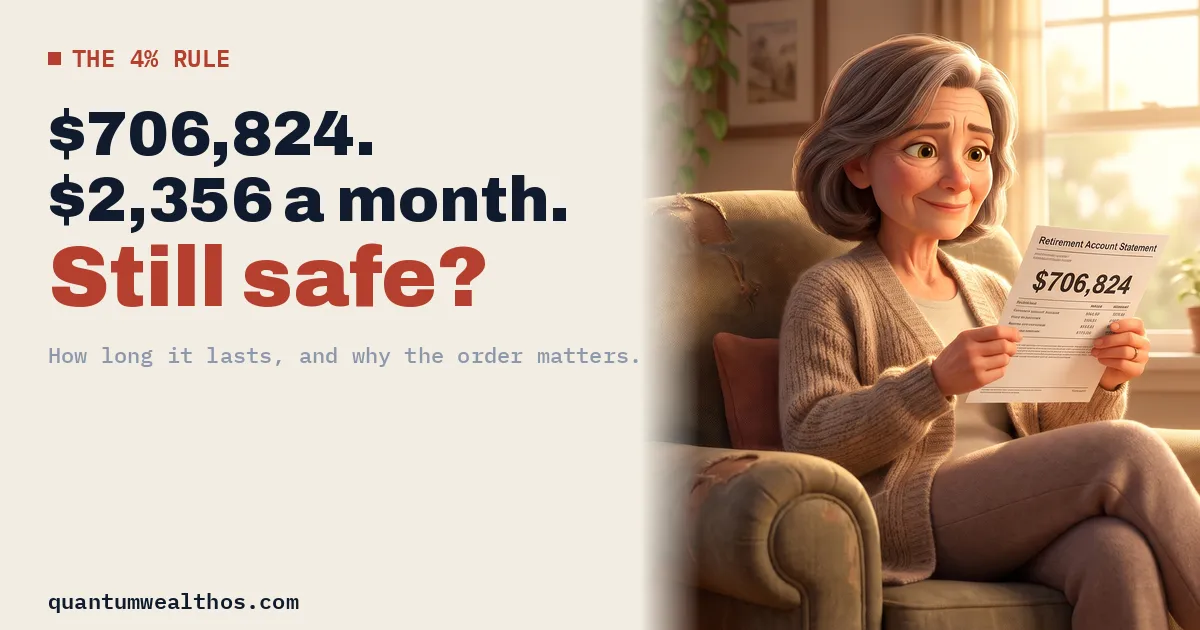
The 4% rule: is it still safe? (Honest Check)
4% of Denise's $706,824 is $2,356 a month. At 5% after inflation it never runs out; at 1% it lasts 28 years 9 months. And the same five market years, in a different order, leave her $45,641 apart.
-
· stock market crash, 2008, bear market, investing
Stock market crash: what happened to $10,000 in 2008 and 2022
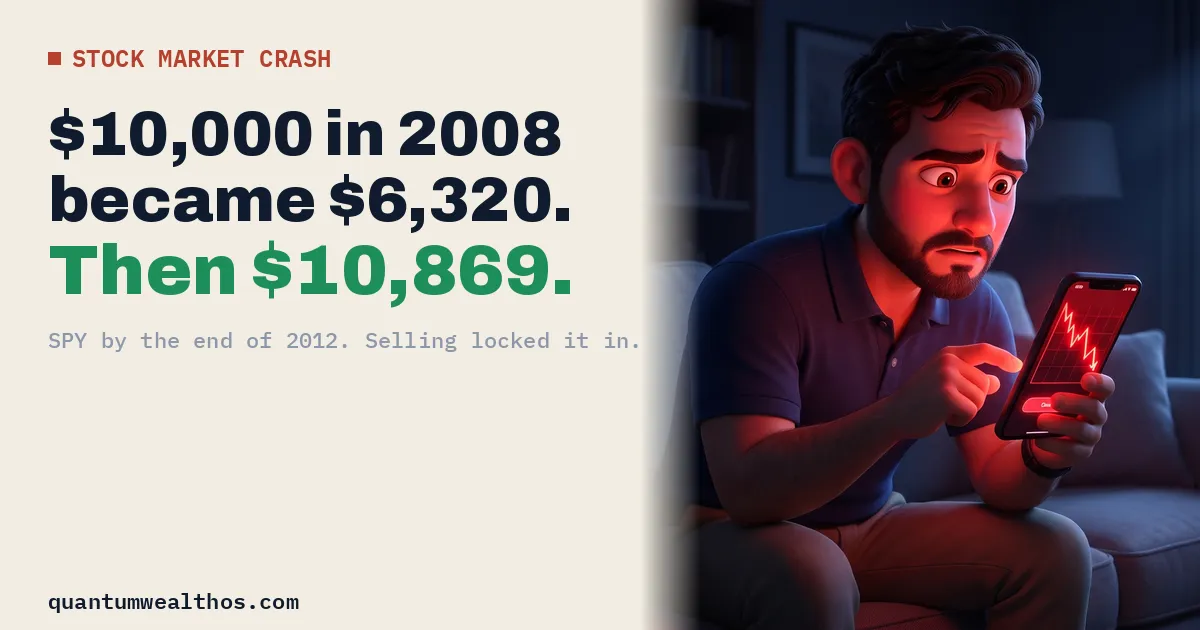
$10,000 in SPY (the S&P 500 fund) at the start of 2008 fell to $6,320, then got back to $10,869 by the end of 2012. Tech in 2022 recovered fast. QQQ in 2000 took 15 years. The real numbers, run through the calculator.
-
· fire, financial independence, 4% rule, retirement
Your FIRE number and the 4% rule
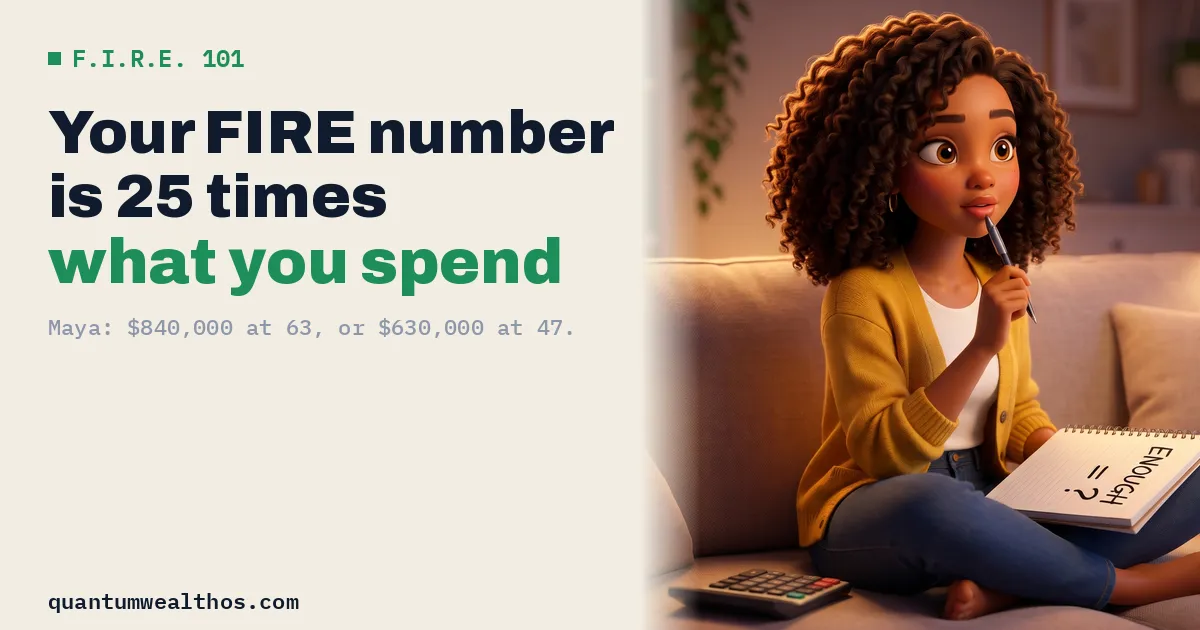
Your FI number is 25 times what you spend in a year. Maya's is $840,000, reached at 63. Spending $2,100 a month instead drops it to $630,000, reached at 47. Then the Honest Check: 6% returns and a 3.5% rule.
-
· late start, 401k, catch-up contributions, retirement
Starting at 45 with $0: is it too late to retire?
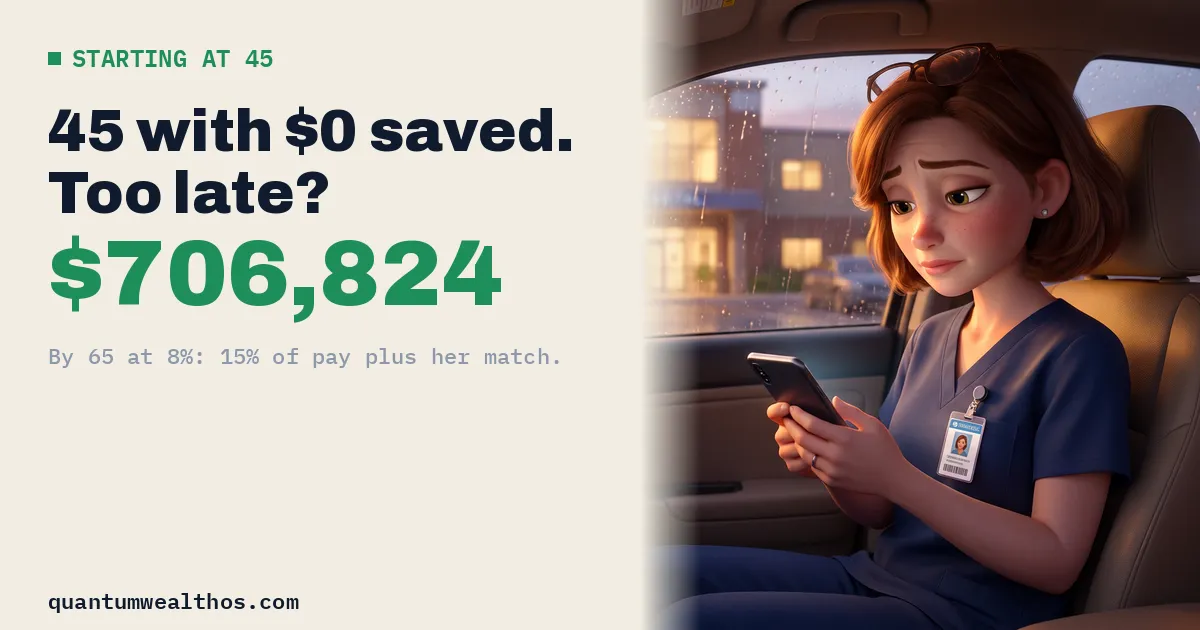
Denise is 45 with nothing saved. 15% of her pay plus her hospital's match could reach $706,824 by 65 at 8%, close to Marcus, who started at 35. Waiting five more years costs her $291,578.
-

· fees, expense ratio, advisors, investing
The fee that eats your retirement
A 1% yearly fee takes $135,194 out of Marcus's $745,180, about 18% of his retirement. VOO's 0.03% takes $4,523. How fees compound, and how to find yours.
-

· etfs, index funds, fees, getting started
What's an ETF? Meet the 7 funds we use
An ETF is a basket of investments you buy with one ticker. Our seven funds, their fees, one job each, and why the last 10 years of returns are not a forecast.
-
· roth ira, income limits, backdoor roth, taxes
Who can contribute to a Roth IRA? Four rules
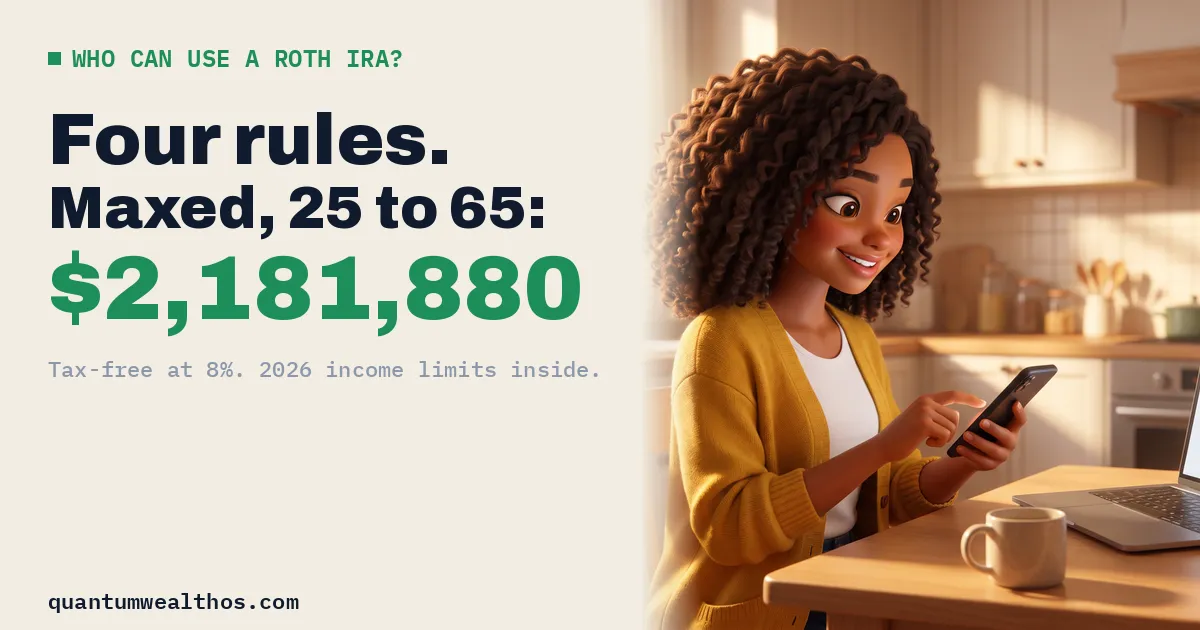
Earned income, the 2026 income limits, the spousal IRA and the backdoor Roth, plus what maxing a Roth from 25 to 65 could grow to: $2,181,880 tax-free at 8%.
-

· roth ira, traditional ira, 401k, taxes
401(k), traditional IRA or Roth IRA: which bucket first?
If your tax rate is the same now and later, traditional and Roth tie to the dollar. The real question is higher or lower later, plus a common order to fill them.
-
· 401k, employer match, getting started
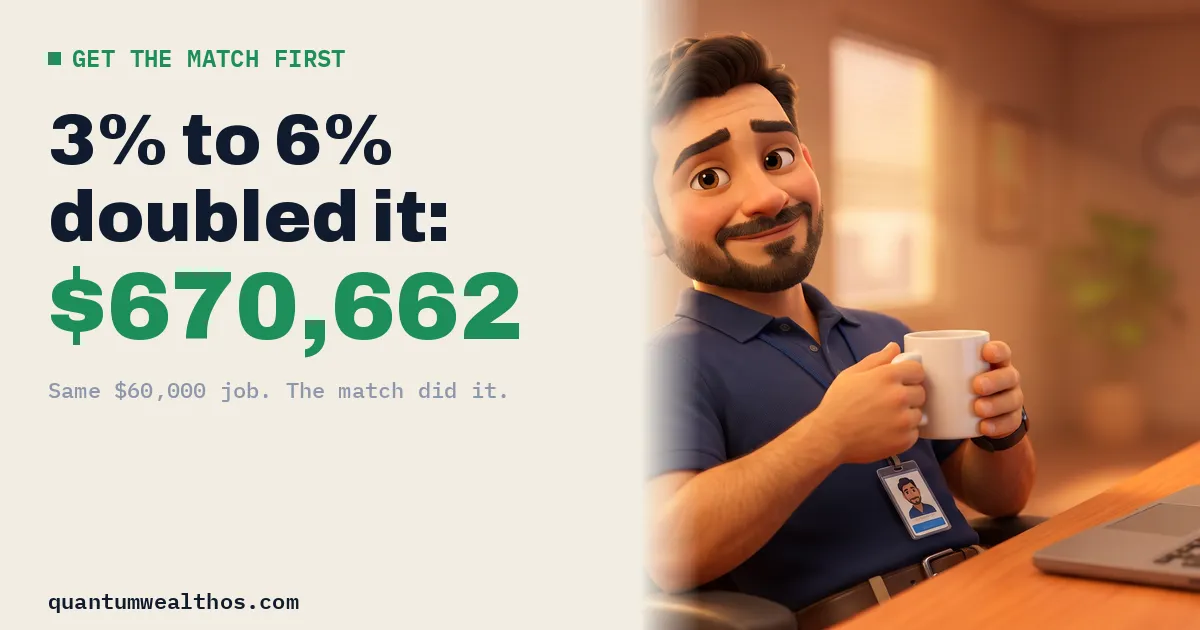
Get the 401(k) match first: the raise most people skip
Marcus moved his 401(k) from 3% to 6% and his balance at 65 doubled, from $335,331 to $670,662. Why the match is a 50% return on day one, and the catch.
-
· emergency fund, debt, 401k, getting started
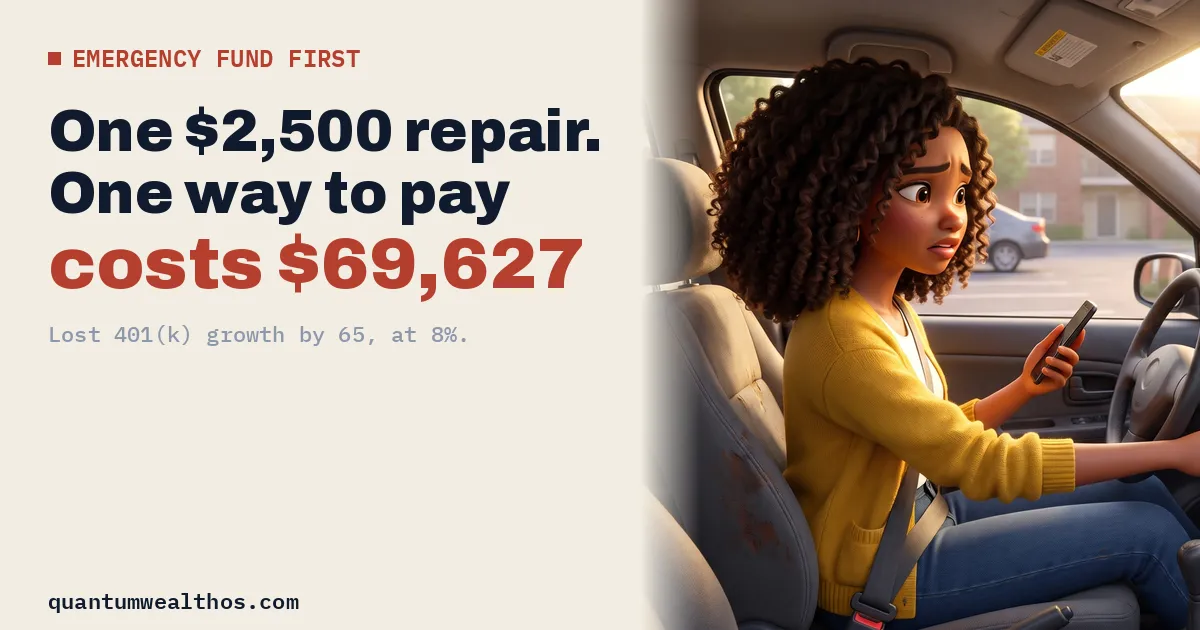
Emergency fund first: one $2,500 repair, four very different bills
Maya's car needs a $2,500 repair. A credit card, a 401(k) withdrawal, selling investments or savings? We ran all four. One quietly costs $69,627 by 65.
-
· compound growth, getting started, small amounts
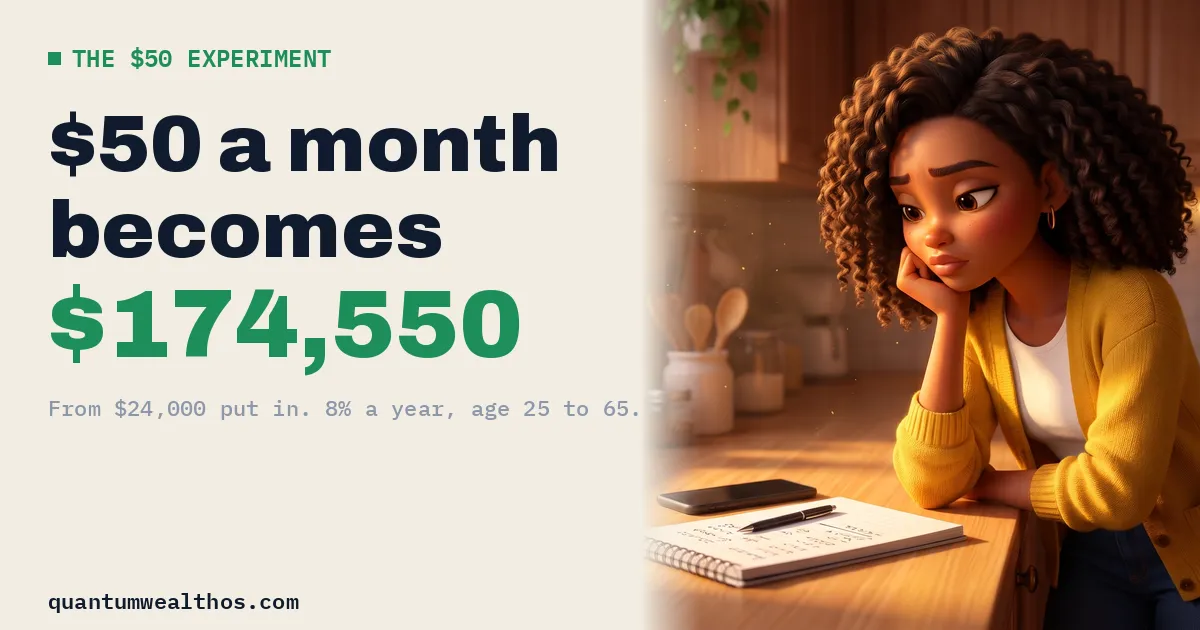
What $50 a month actually becomes
$50 a month from 25 to 65 grows to $174,550 at 8% from $24,000 put in. Here's why the first ten years feel slow, and the step-up that turns it into $942,664.
-
· compound growth, getting started, time does the work
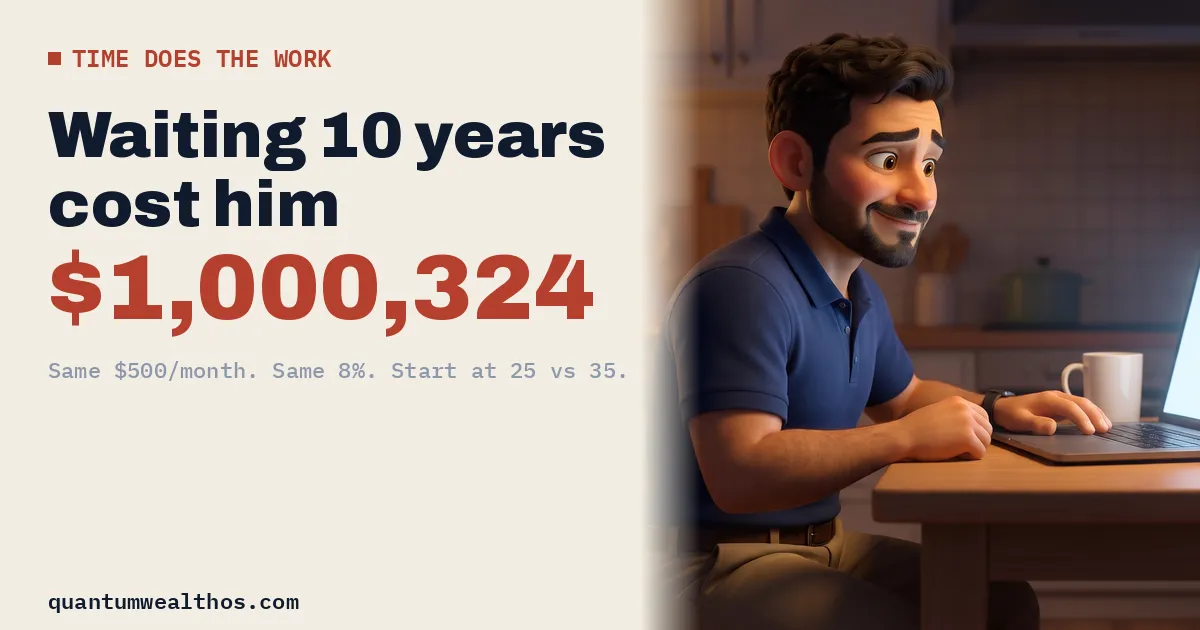
Waiting 10 years to invest cost him $1,000,324
Same $500 a month, same 8%. Starting at 25 instead of 35 ends with $1,745,504 instead of $745,180. The math, the twist, and the 6% Honest Check.