



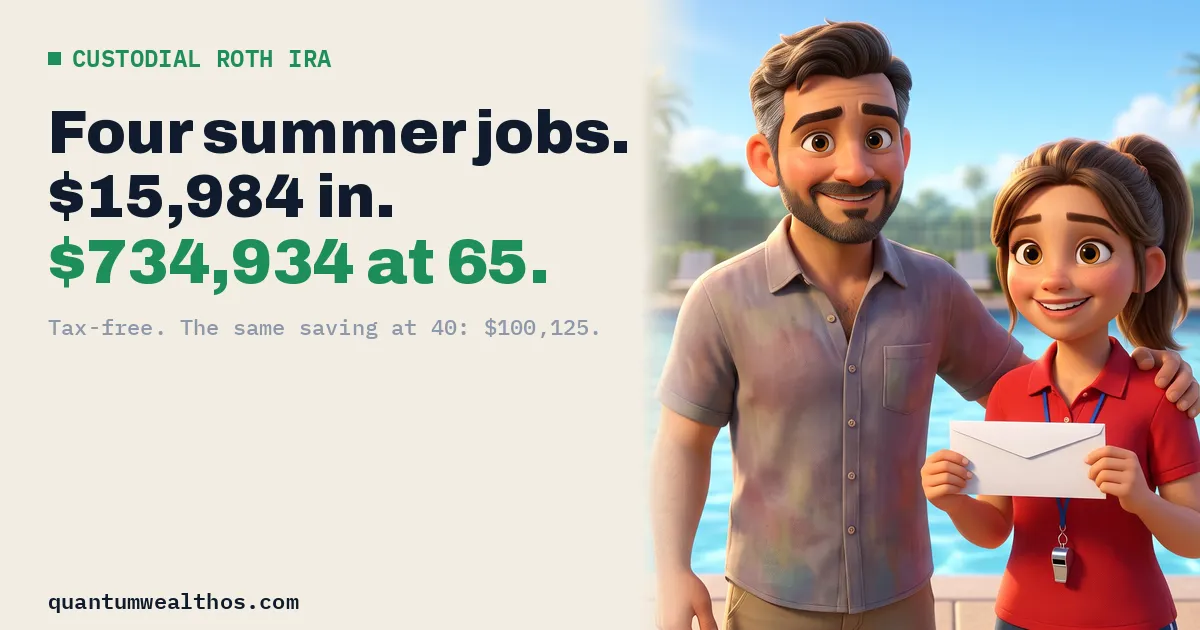
Marcus’s daughter Jada is 15. This summer she got her first job, lifeguarding, and earned $4,000. Marcus didn’t start investing until his thirties. He wants her to start at 15.
The rule
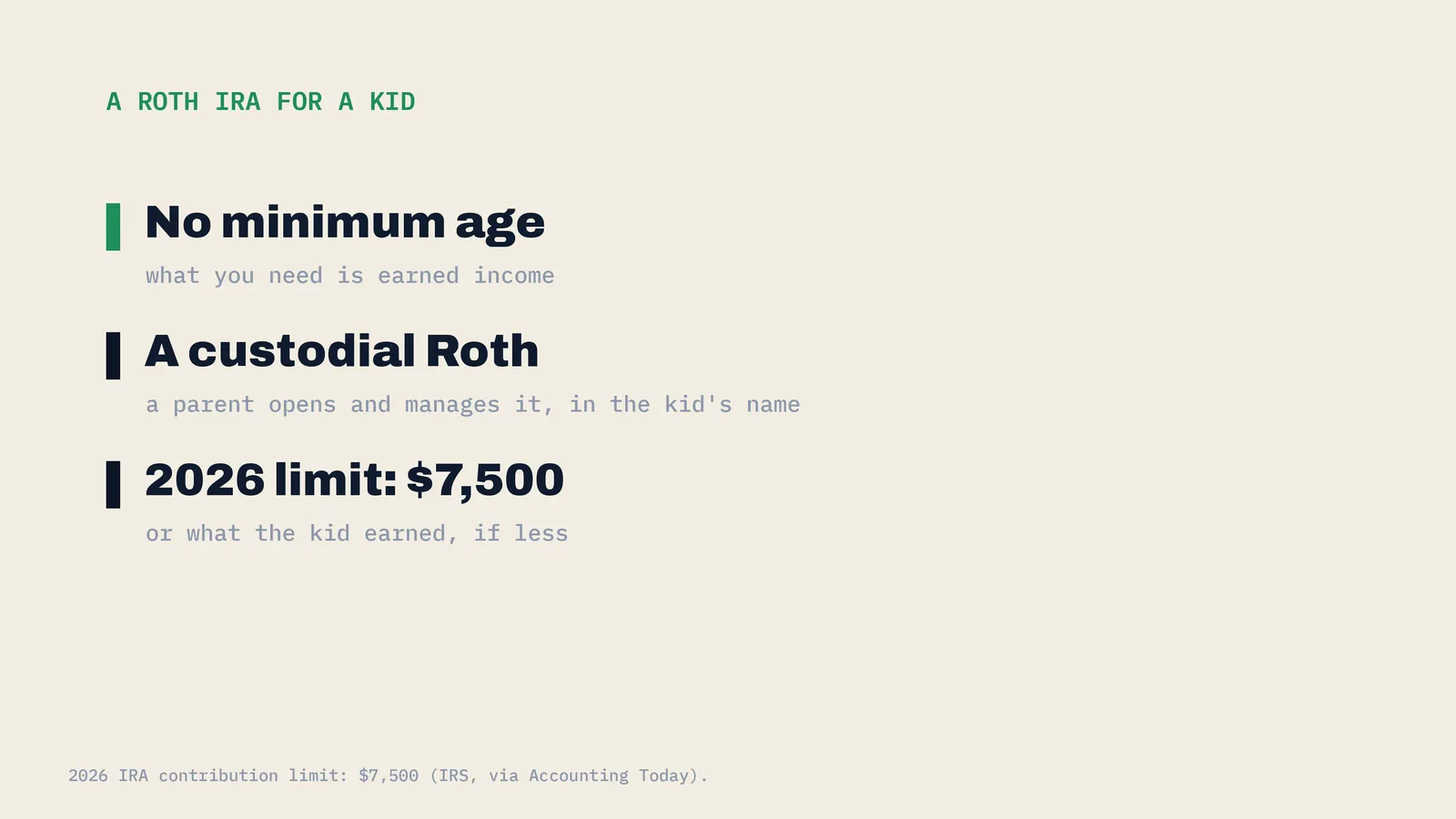
There’s no minimum age for a Roth IRA. What you need is earned income. A kid with a real job can have a custodial Roth: a parent opens and manages it, in the kid’s name.
The 2026 limit is $7,500, or whatever the kid earned, if that’s less.
One summer
$4,000 at 15, never touched again, 8% a year until 65. That’s 50 years: $215,513. From one summer job.
Four summers
| Jada | At 8% |
|---|---|
| $333 a month, 15 to 18 | $15,984 in |
| Balance at 19 | $18,765 |
| Left alone for 46 years, at 65 | $734,934, tax-free |
Same saving, started at 40
| Same 4 years of saving | Value at 65 (8%) |
|---|---|
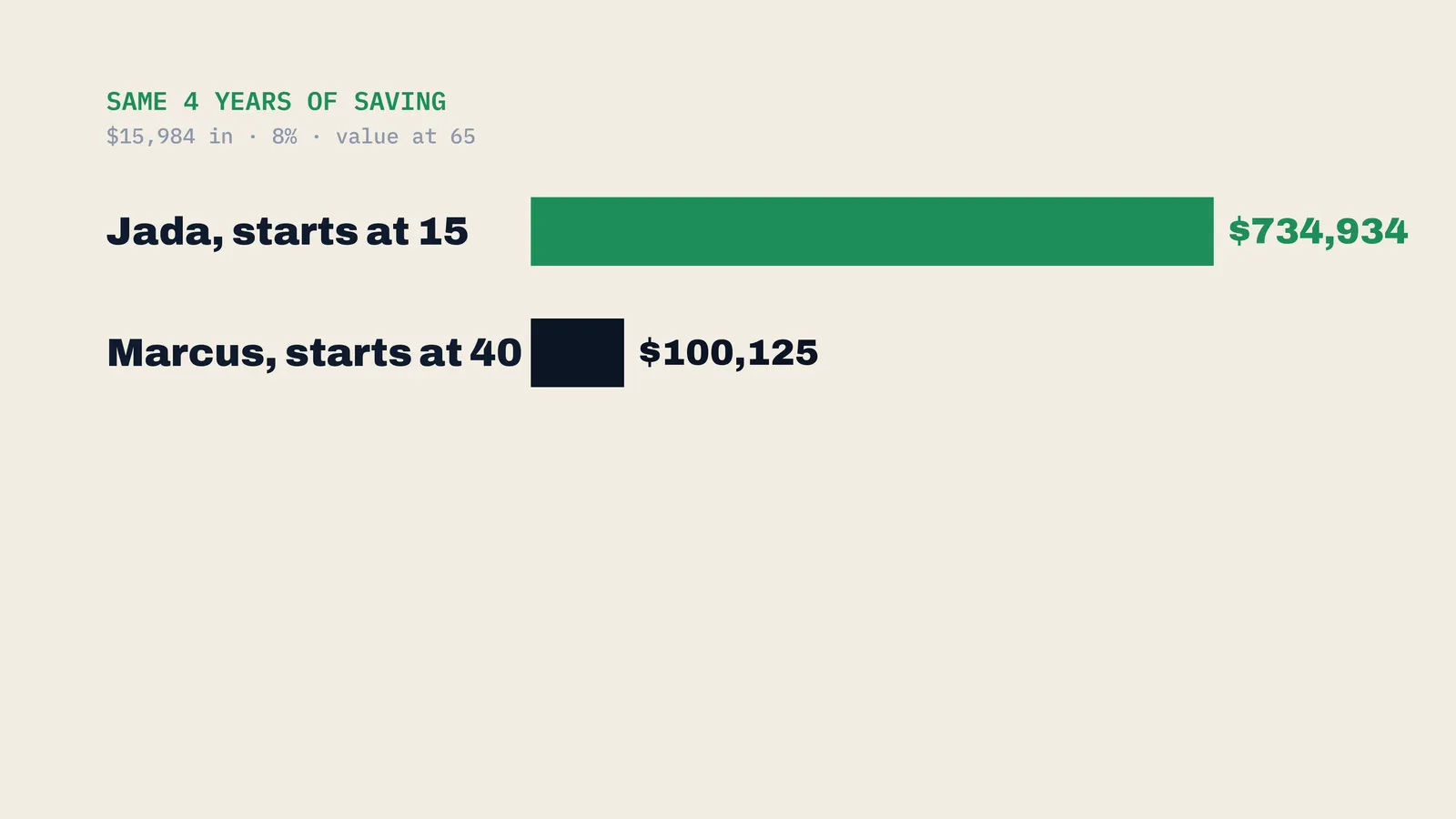
| Jada, starts at 15 | $734,934 |
| Marcus, starts at 40 | $100,125 |
Jada’s head start is worth more than 7 times as much.
Whose money goes in?
Jada doesn’t have to hand over her paycheck. Marcus can give her the money to put in. The rule is about how much she earned, not whose dollars go in.
The Honest Check: 6%
| At 6% | Value at 65 |
|---|---|
| Jada | $282,683 |
| Marcus, starting at 40 | $63,311 |
Still about 4½ times more.
CPA Note from Daryl (tax year 2026)
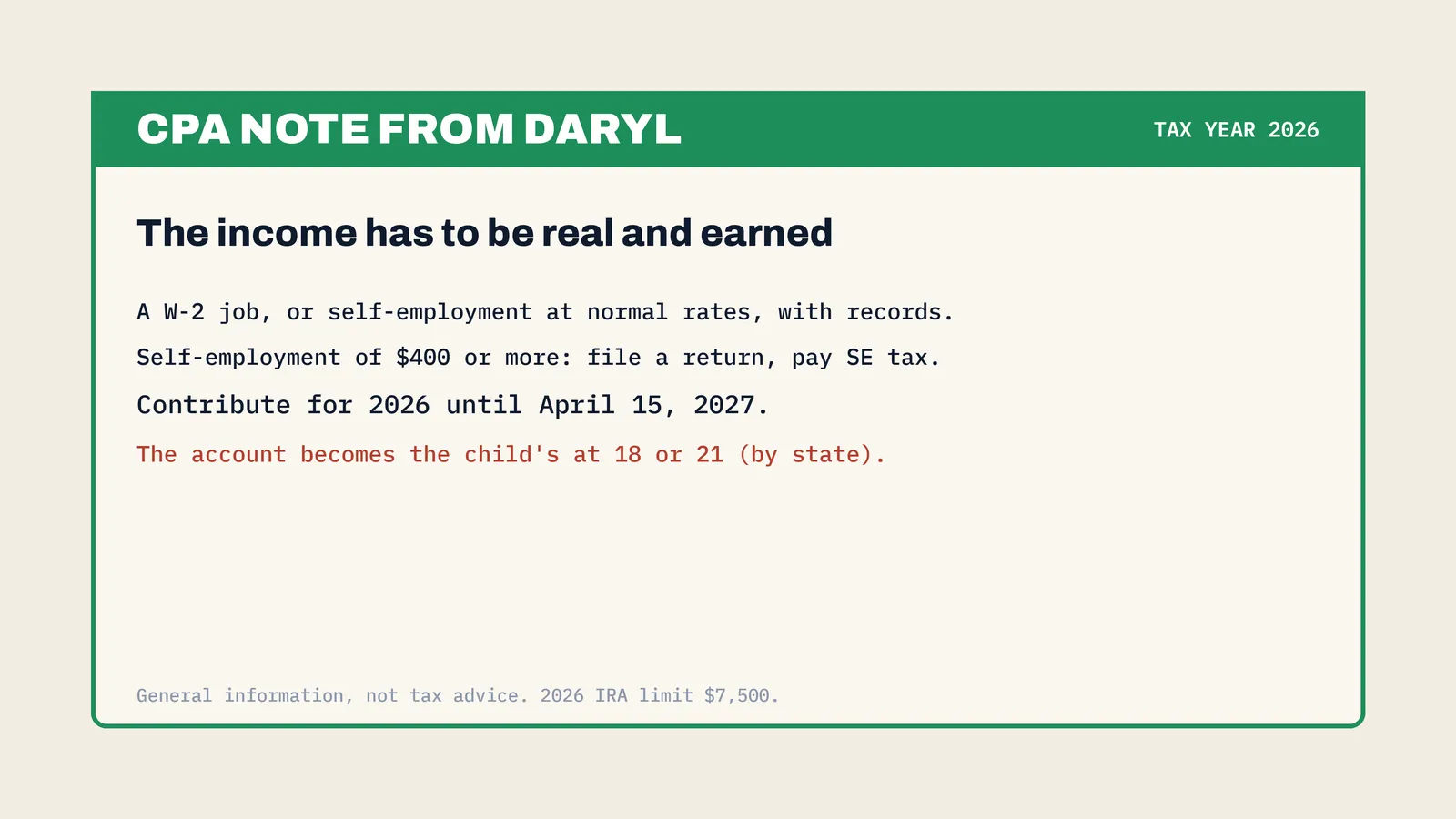
- The income has to be real and earned: a W-2 job, or self-employment like babysitting or mowing lawns, at normal rates, with records.
- Self-employment earnings of $400 or more mean filing a return and paying self-employment tax.
- You have until April 15, 2027 to contribute for 2026.
- The account becomes the child’s at 18 or 21, depending on your state.
The biggest thing you can give a kid isn’t the money. It’s the 50 years.
Next up: when to take Social Security, 62, 67 or 70. The Season 1 finale.
How the math works
All figures come from the QWOS Compound Interest Calculator, compounded monthly: $4,000 for 50 years; $333 a month for 4 years; $18,765 (or $18,015 at 6%) left alone for 46 or 21 years; 8% or 6%. IRA limit: IRS 2026 limits via Accounting Today.
Education, not financial or tax advice. Hypothetical returns; real results vary and losses happen.