



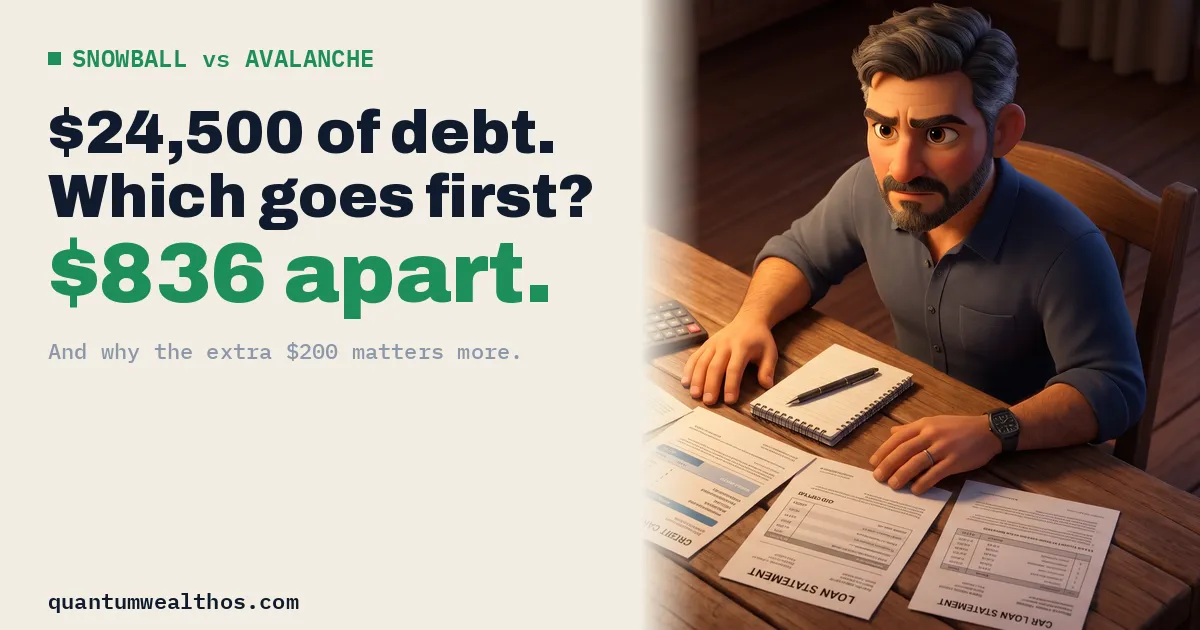
Marcus owes $24,500 across four debts. He’s found an extra $200 a month. Now the big question: which debt gets it first?
The four debts
| Debt | Balance | Rate | Minimum |
|---|---|---|---|
| Medical bill | $1,500 | 0% | $50 |
| Visa | $7,000 | 24% | $210 |
| Personal loan | $4,000 | 11% | $130 |
| Car loan | $12,000 | 7% | $330 |
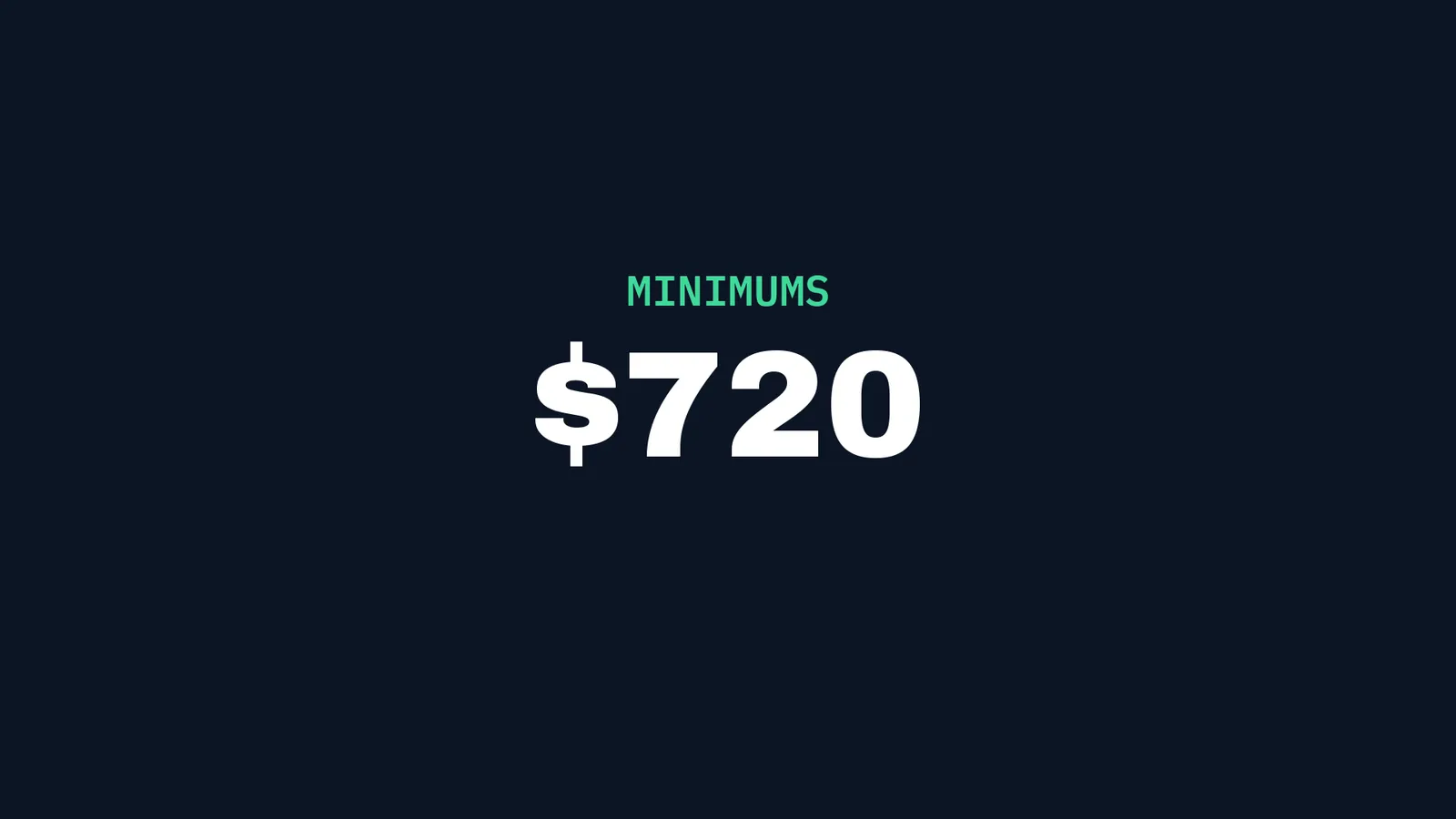
Minimums: $720. Plus his $200: $920 a month.
Two famous methods
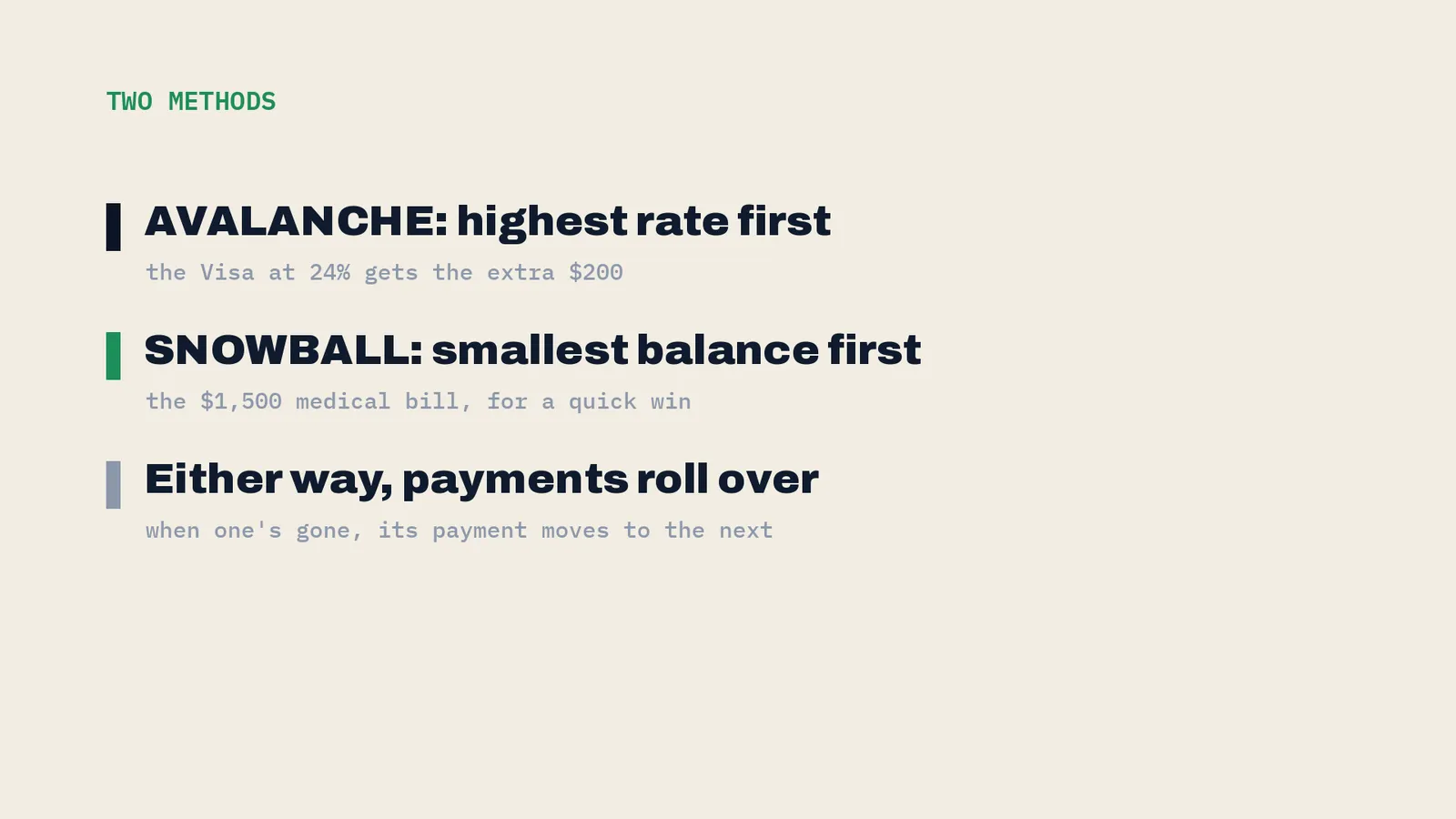
- Avalanche: put the extra on the highest rate first (the Visa).
- Snowball: put it on the smallest balance first (the medical bill), for a quick win.
Either way, when one debt is gone, its payment rolls into the next.
The result, with $200 extra
| Debt-free in | Total interest | |
|---|---|---|
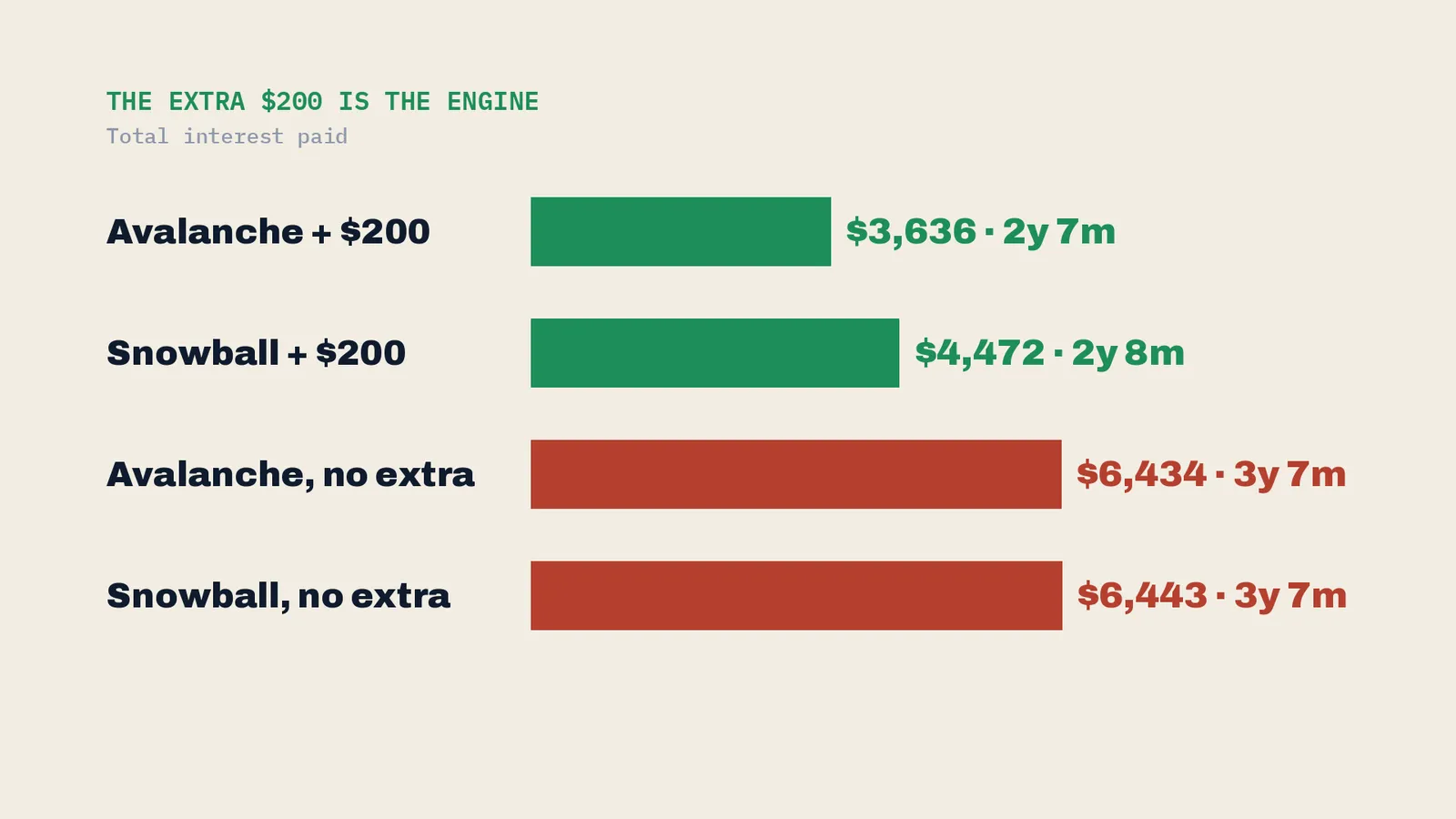
| Avalanche | 2 years 7 months | $3,636 |
| Snowball | 2 years 8 months | $4,472 |
The avalanche saves $836 and one month. On paper, it wins.
But researchers at Northwestern’s Kellogg School studied about 6,000 people paying off debt. The ones who closed out whole accounts were more likely to finish, even though it wasn’t the cheapest way. Small wins keep you going.
The Honest Check: the method or the $200?
Without the extra $200, both methods take 3 years 7 months. Interest: $6,434 vs. $6,443. Nine dollars apart.
With the avalanche, the $200 is what saves him about $2,800 and a full year (with the snowball, $1,971 and 11 months). The method is the steering wheel. The extra payment is the engine.
So which one?
- Disciplined? Avalanche.
- Need to see progress? Snowball.
- Both beat minimums only.
- And neither works if you keep adding to the cards.

The best debt plan is the one you finish. Run yours, both ways.
Next up: Maya takes on the biggest money question of all: rent or buy?
How the math works
All payoff times and interest totals come from the QWOS Debt Payoff Calculator with the four debts above, $200 extra a month (then $0). The total monthly payment stays the same as each debt is paid off; the freed-up minimum rolls to the next debt. Research: Kellogg School of Management, “The Snowball Approach to Debt” (2012).
Education, not financial advice.