



Time does the heavy lifting.
The same $500 a month, started ten years earlier, ends about $1,000,000 ahead. Quantum Wealth OS shows you why with real calculators, then lets you run your own numbers.
Start at 25
$1,745,504
Start at 35
$745,180
What is Quantum Wealth OS?
Quantum Wealth OS is a free personal-finance site and YouTube channel run by a CPA. Every guide and every episode runs real numbers through one of our free calculators, so you can see what steady investing does over time and then check the math for your own life.
- Honest math
- Every scenario runs in a real calculator. Assumptions are written down, so you can check them.
- One lane
- Steady investing, early retirement, and wealth that outlasts you. No hype, no stock tips.
- Your numbers
- Watch the example, then run your own age, income and goals in the same calculator.
Start here
All calculators →- Compound Interest Calculator See how your money grows over time
- FIRE Calculator Financial Independence, Retire Early
- Roth IRA Calculator Project your Roth IRA value
- Delayed Action Cost Show the cost of waiting to invest or pay down debt
- Coast FIRE Calculator Stop saving and still retire on time
- Net Worth Momentum Track if your net worth is accelerating or stalling


Latest from the blog
All posts →-

The buy now, pay later trap (we ran the math)
Pay in 4 for sneakers, headphones and a jacket, plus a laptop on a 12-month plan. Maya's 'interest-free' December cost about $600. The numbers from QWOS calculators, and when buy now, pay later is actually okay.
-
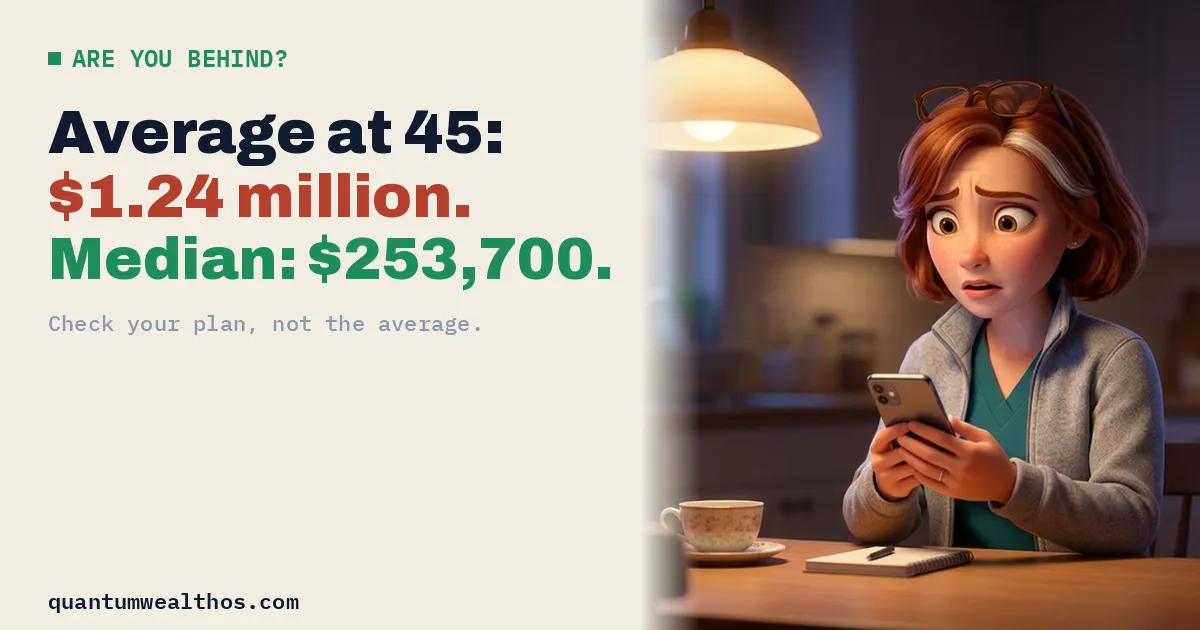
Are you behind? What the average 45-year-old has (real numbers)
Families aged 45 to 54 had an average net worth of $1,244,500 in 2025, but the median was $253,700. Denise checks the right numbers: her net worth, her momentum, and her actual retirement plan.
-
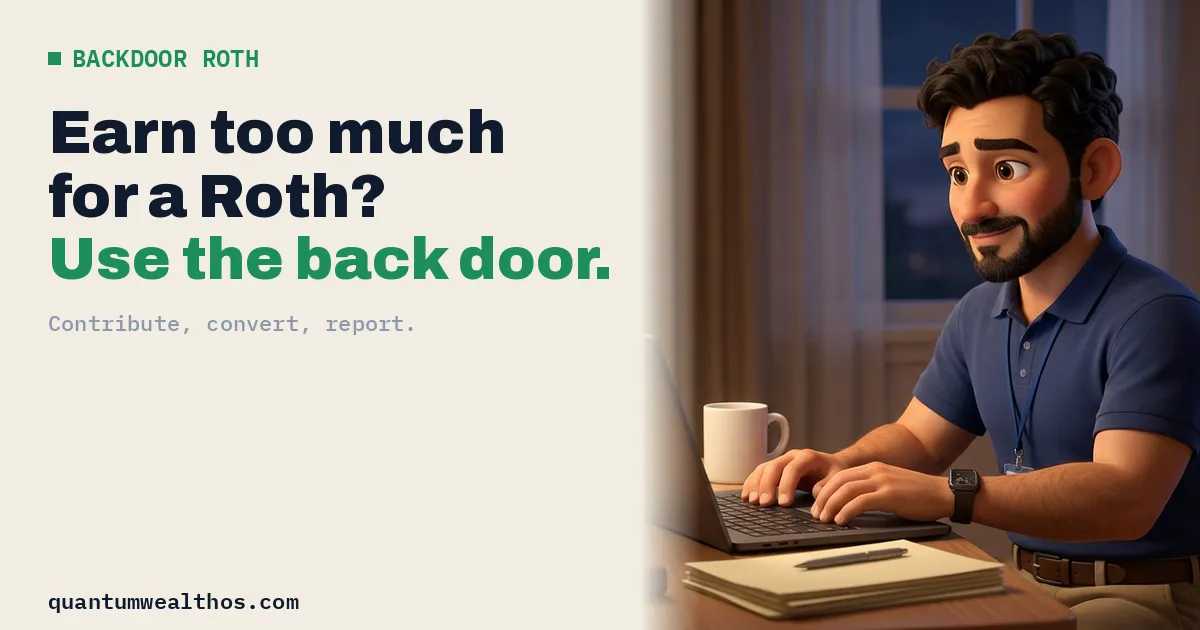
Earn too much for a Roth? The backdoor, step by step
The 2026 Roth IRA phases out at $153,000 to $168,000 for single filers. Conversions have no income limit. Marcus's backdoor Roth in three steps, plus the pro-rata trap, with numbers from QWOS calculators.
-

Do this every time you get paid (the paycheck order)
Match, emergency fund, high-interest debt, Roth IRA, then the rest. Maya's paycheck order, with the numbers for each step from QWOS calculators.
-

5 signs you're doing better financially than you think (calculator check)
A cushion for surprises, the full match, saving more than 12.1%, net worth going up, and no card balance. Each sign checked with a real number from a QWOS calculator.
-
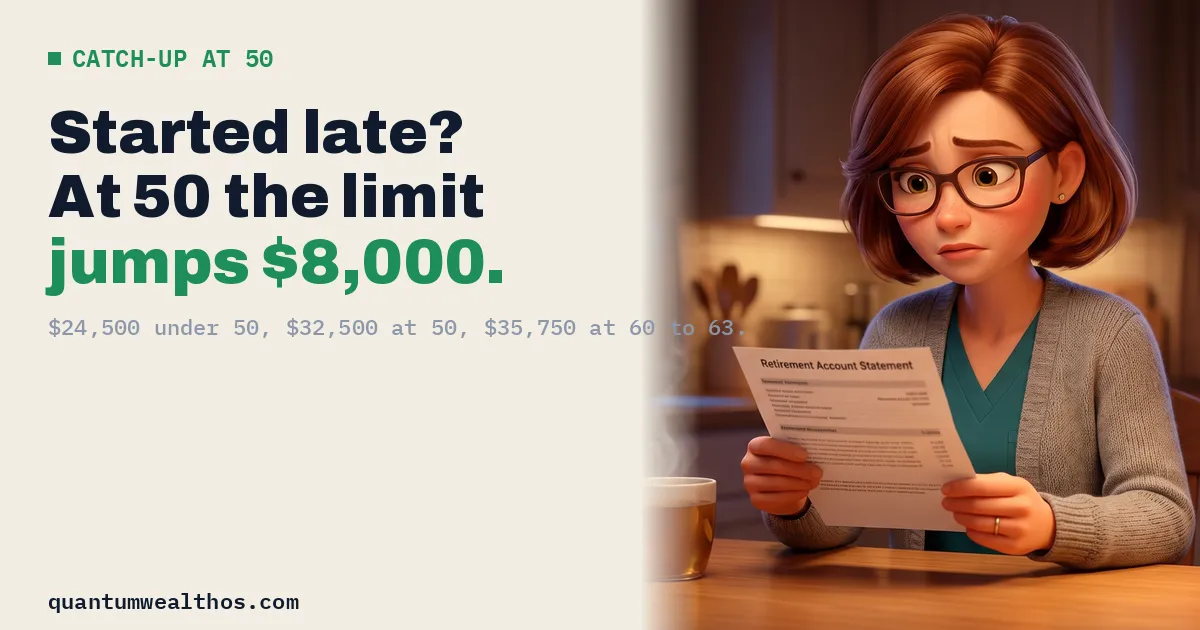
Started late? Why everything changes at 50 (catch-up math)
At 50 the 401(k) limit jumps from $24,500 to $32,500, and to $35,750 at ages 60 to 63. Denise is 45 with $85,000 saved. Here's what the catch-up is worth, what it isn't, and the new Roth rule for 2026.
-
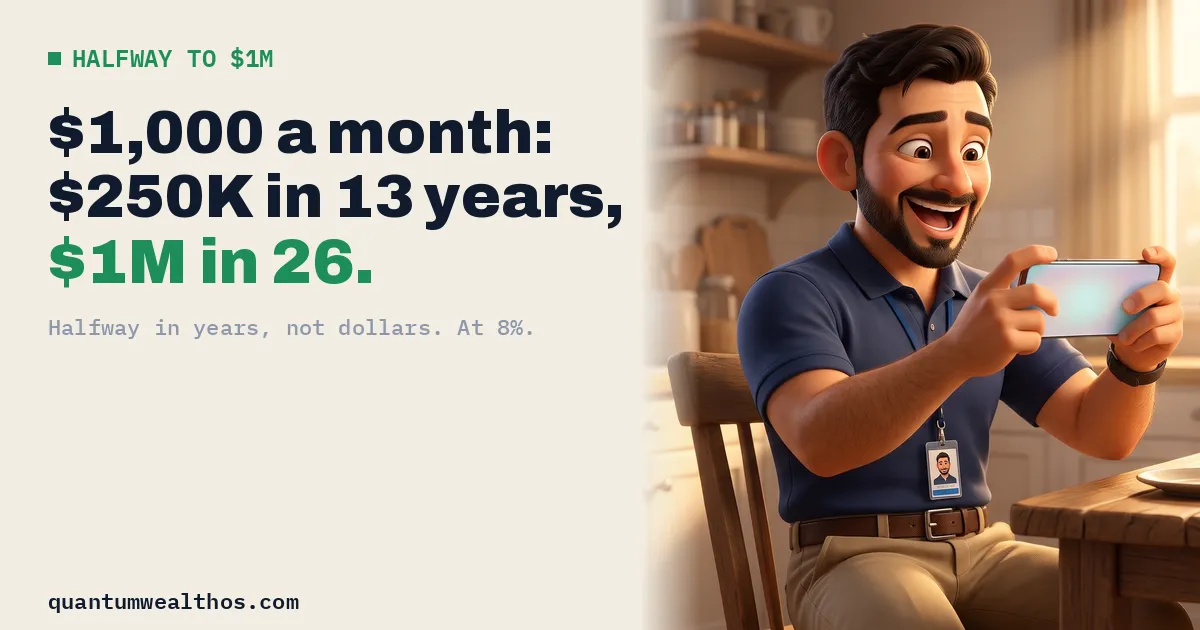
Why $250K is halfway to $1 million (we ran the math)
$1,000 a month at 8% takes about 13 years to pass $250,000, then about 13 more to pass $1 million. Here's the math behind the headline, three ways to get there sooner, and the Honest Check at 6%.
-
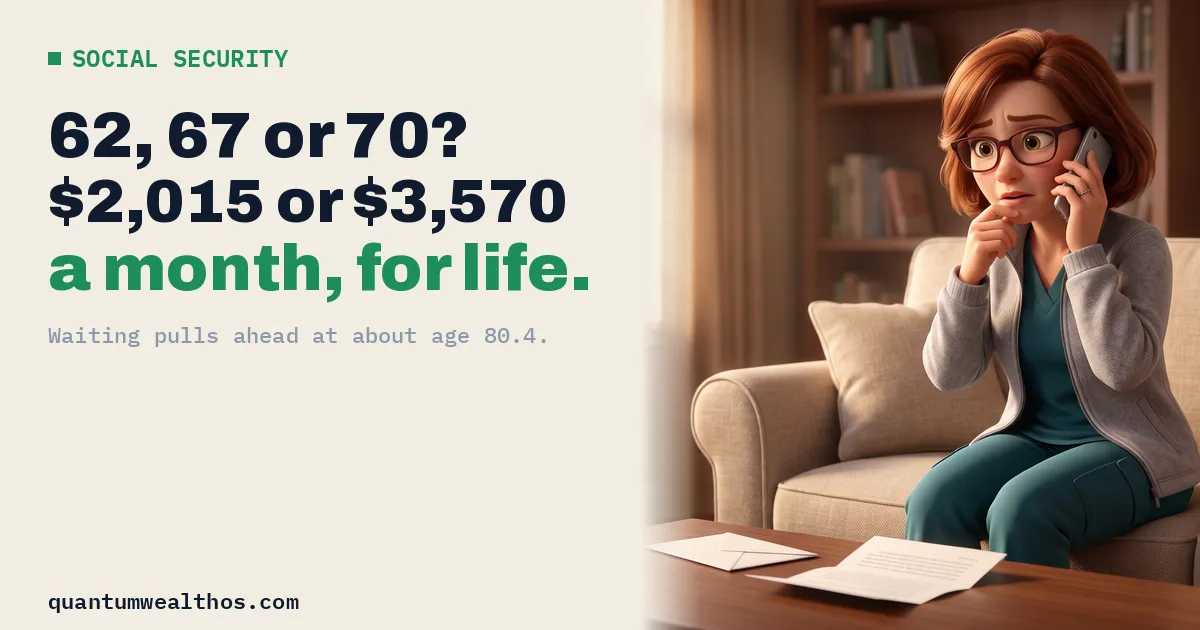
When to take Social Security: 62 vs 67 vs 70
For Denise, waiting until 70 pays $1,555 a month more than claiming at 62, for life. Waiting pulls ahead in total at about age 80.4. Here's the math, the trust-fund caveat, and how benefits get taxed.
-
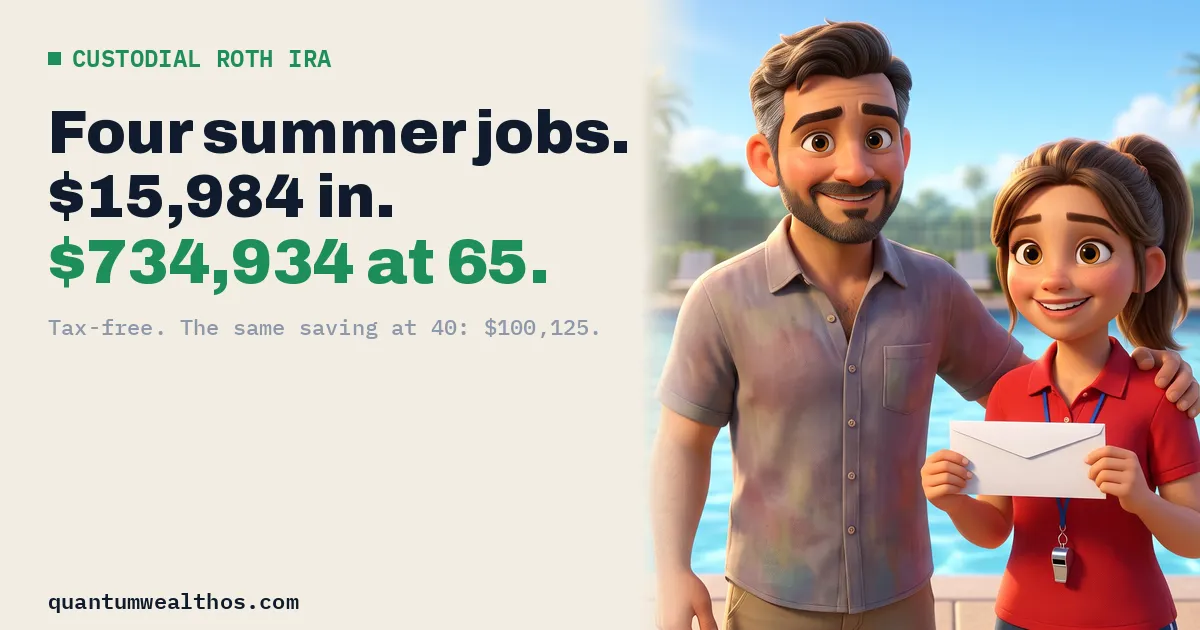
Custodial Roth IRA for kids: the head start explained
Four summers of a teen's paycheck, about $16,000, can grow to $734,934 tax-free by 65 at 8%. The same saving started at 40 grows to $100,125. Here's how a custodial Roth IRA works.
-
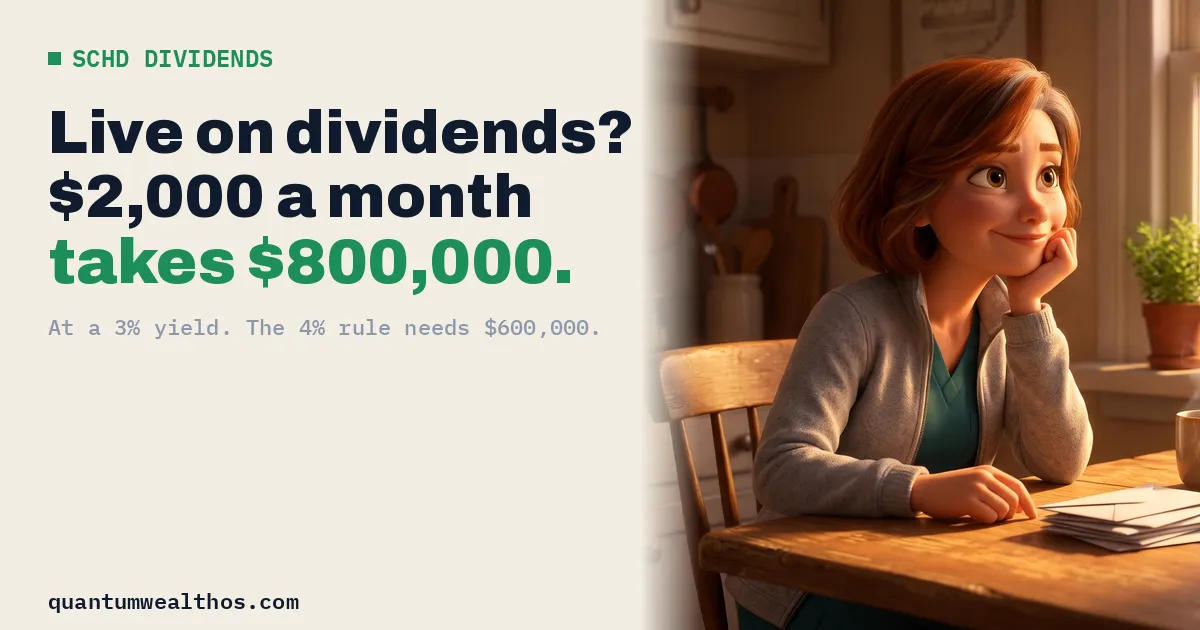
SCHD dividend investing: can dividends pay your bills?
To cover $2,000 a month with dividends at a 3% yield, you need $800,000. Denise's $1,200-a-month plan gets there at 67, not 65. And a dividend is part of your return, not extra money.
-
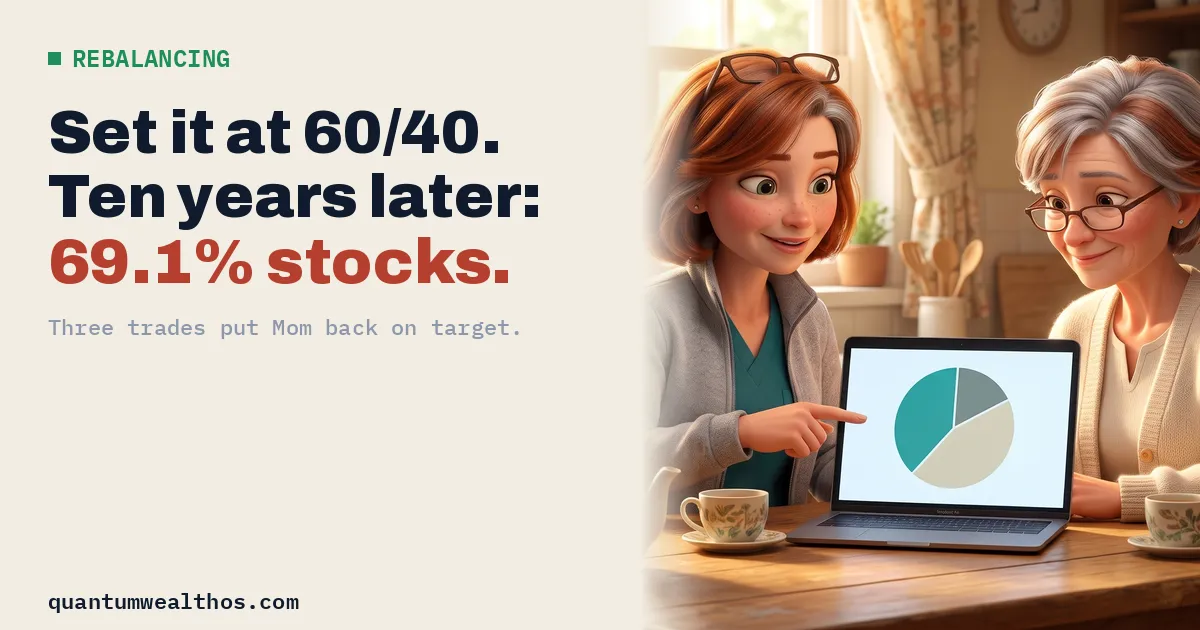
How to rebalance your portfolio (and when)
Leave a 60/40 mix alone for 10 years at 8% and 4% and it drifts to 69.1% stocks. Denise's mom's $100,000 IRA has two funds past the 5-point line. Here's how often to rebalance and how to avoid the tax.
-
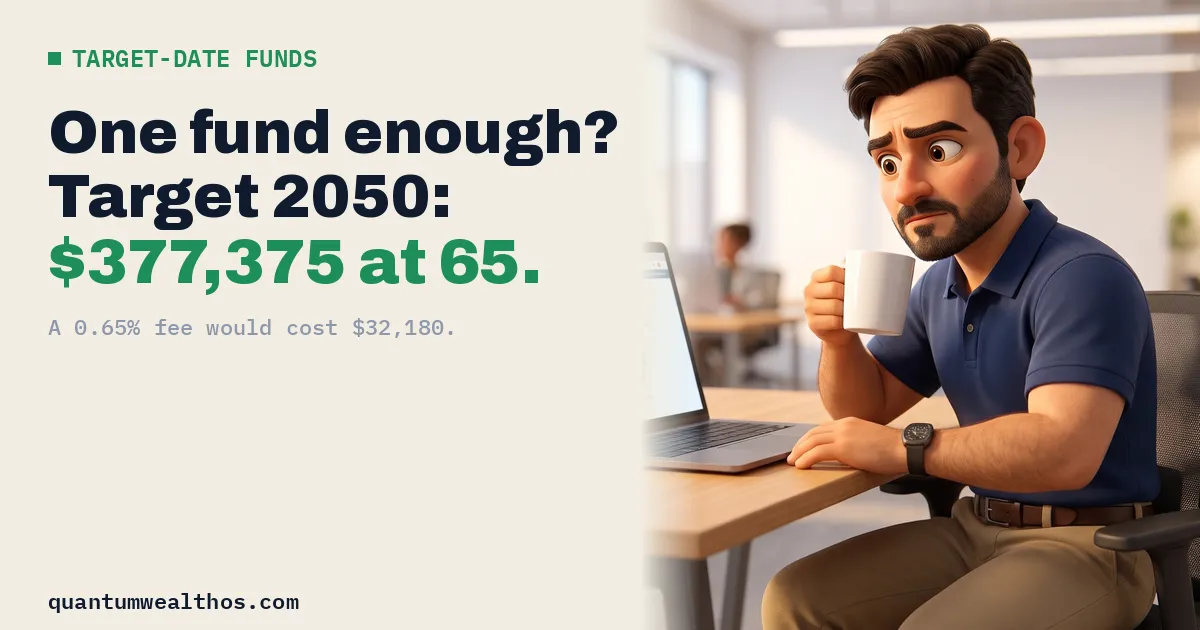
Target-date funds: is one fund enough?
Marcus's 401(k) put him in Target 2050. $500 a month for 25 years at 8% stocks and 4% bonds grows to $377,375. A pricier 0.65% fund would cost him $32,180. Here's how the glide path works and when one fund is enough.
-
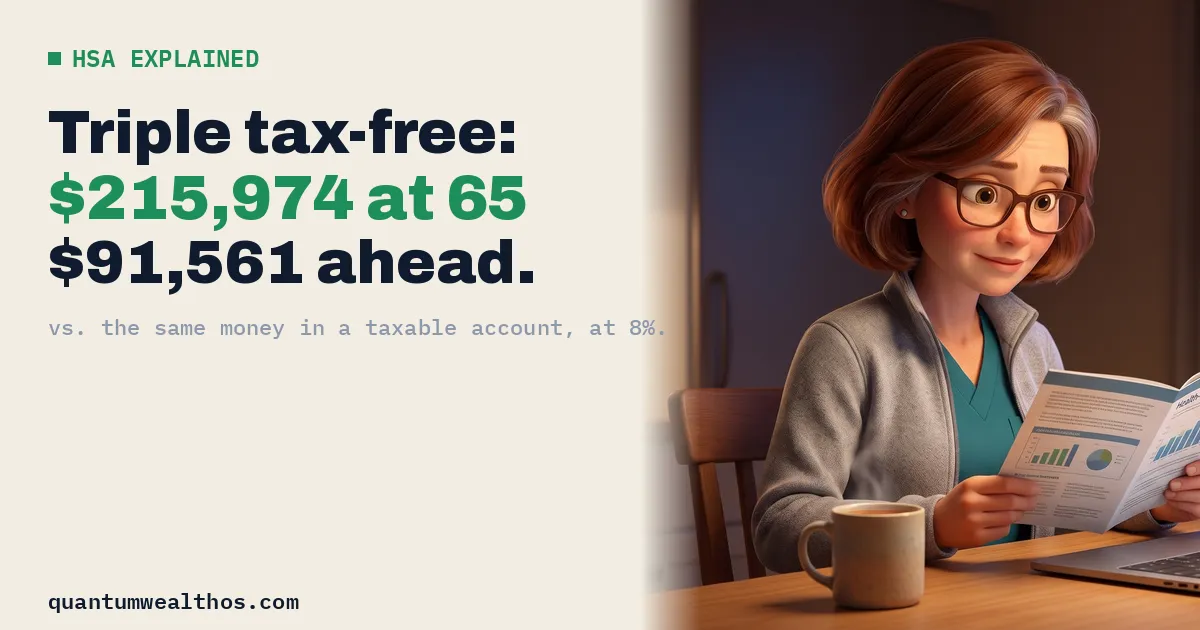
HSA explained: the only triple-tax-free account
Denise puts $4,400 a year into an HSA from 45 to 65. Invested at 8%, it reaches $215,974, $91,561 ahead of the same money in a taxable account. Here's how the three tax breaks work, and the catches.
-
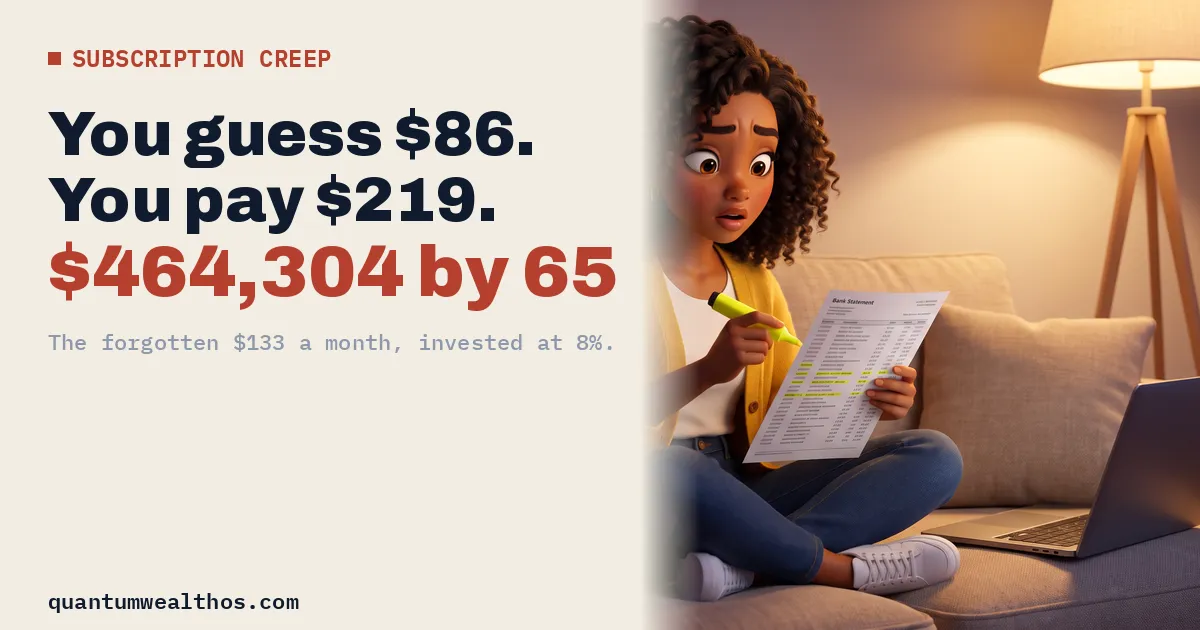
Subscription creep: what your subscriptions cost you by 65
People guess they spend $86 a month on subscriptions; the real average is $219. The forgotten $133 a month, invested from 25 to 65 at 8%, is $464,304. For Maya at 31, it's $280,176.
-
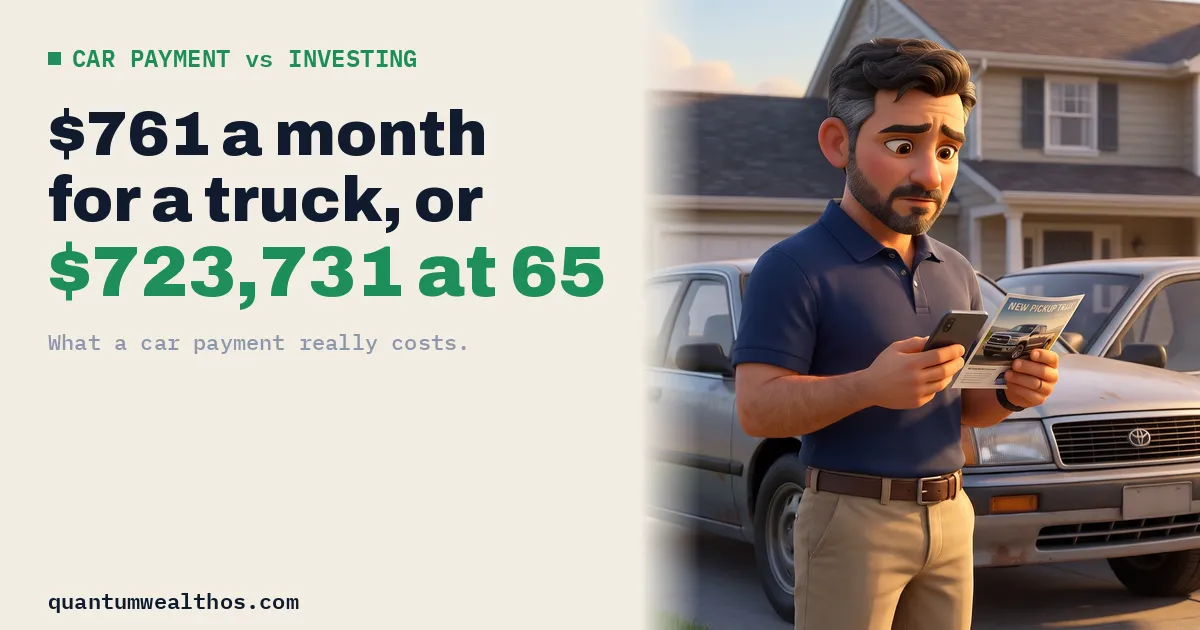
Car payment vs investing: what your car really costs
A $44,664 truck at 7% for 72 months is $761 a month and $10,162 interest. Invested instead, $761 a month is $70,031 in six years at 8%, and $723,731 from 40 to 65.
-
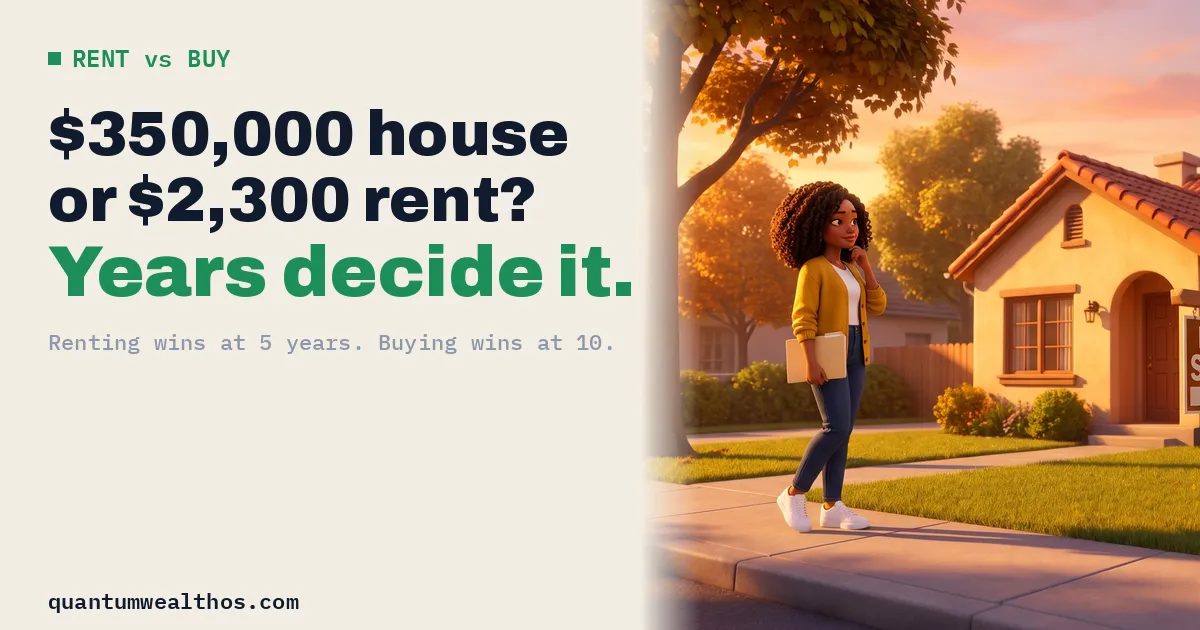
Rent vs buy a house: real math, not opinions
A $350,000 house vs $2,300 rent. At 8%, renting wins at 5 years by $18,458; buying wins at 10 years by $2,294 and at 20 years by $83,508. At 6%, buying already wins at 7 years.
-
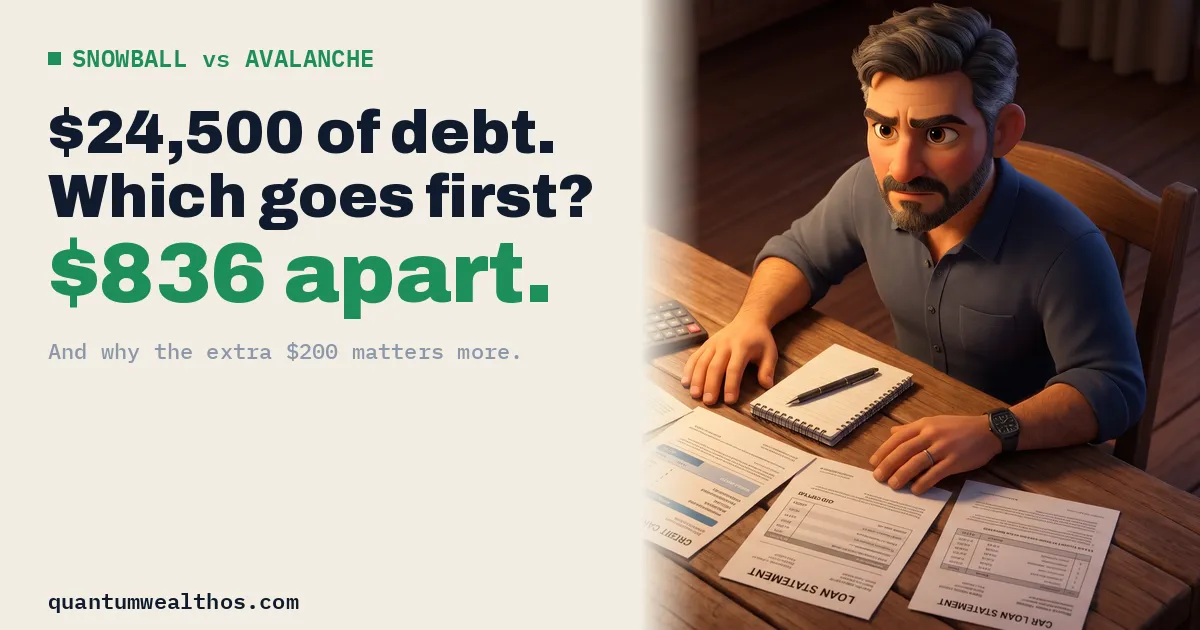
Debt snowball vs avalanche: which pays off debt faster?
Marcus owes $24,500 on four debts. With $200 extra a month, avalanche is debt-free in 2 years 7 months with $3,636 interest; snowball takes 2 years 8 months and $4,472. Without the $200, they're $9 apart.
-

Lifestyle inflation: the raise you never felt
Marcus got a $15,000 raise, but his spending grew 33.3% while his pay grew 25%. That $4,000-a-year leak, as $333 a month from 40 to 65, is $316,692 at 8%. The fix: save half the raise.
-
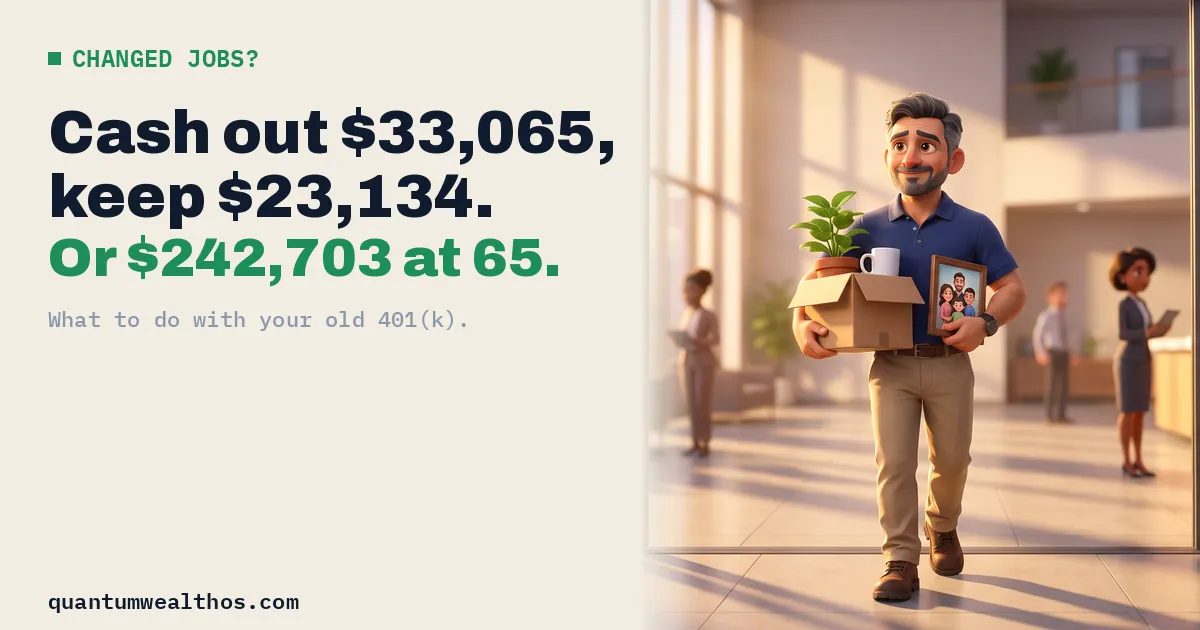
Changed jobs? What to do with your old 401(k)
Marcus, 40, left a job with $33,065 in his 401(k). Cashing out would cost $6,624 in extra federal tax plus a $3,307 penalty. Left alone at 8%, it becomes $242,703 by 65.
-

Coast FIRE: when can you stop saving for retirement?
Maya, 31, has $128,835 from six years of $1,400 a month. At 8% her Coast FIRE number is $125,718, so she could stop saving and still reach $1,763,768 by 65. At 6% she'd keep going until 37.
-
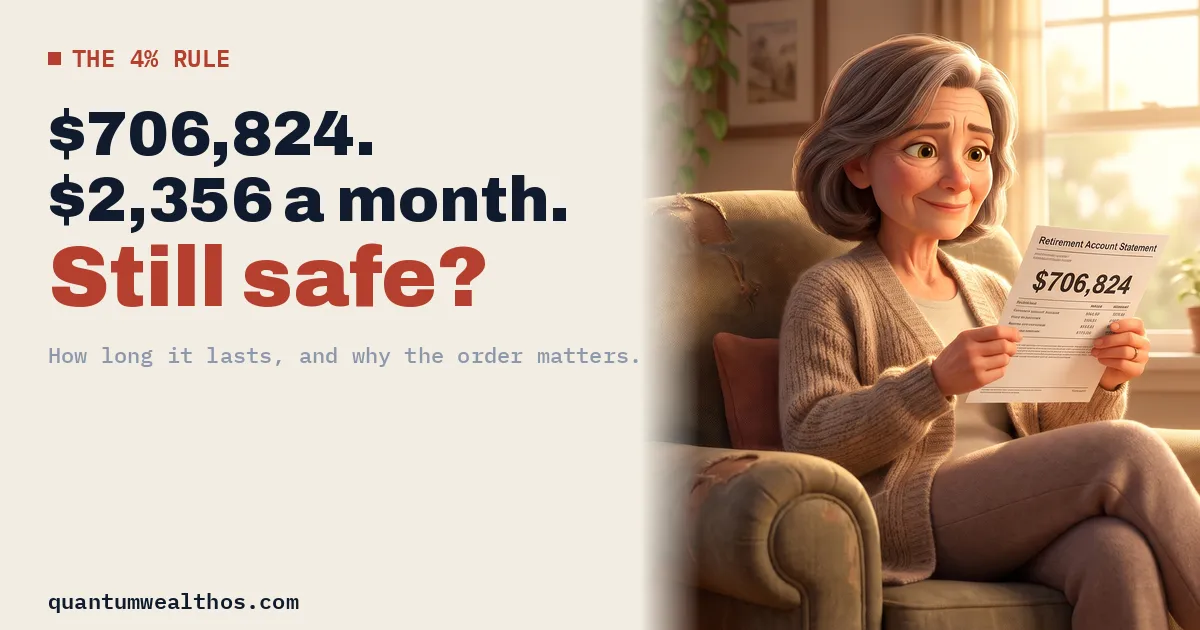
The 4% rule: is it still safe? (Honest Check)
4% of Denise's $706,824 is $2,356 a month. At 5% after inflation it never runs out; at 1% it lasts 28 years 9 months. And the same five market years, in a different order, leave her $45,641 apart.
-
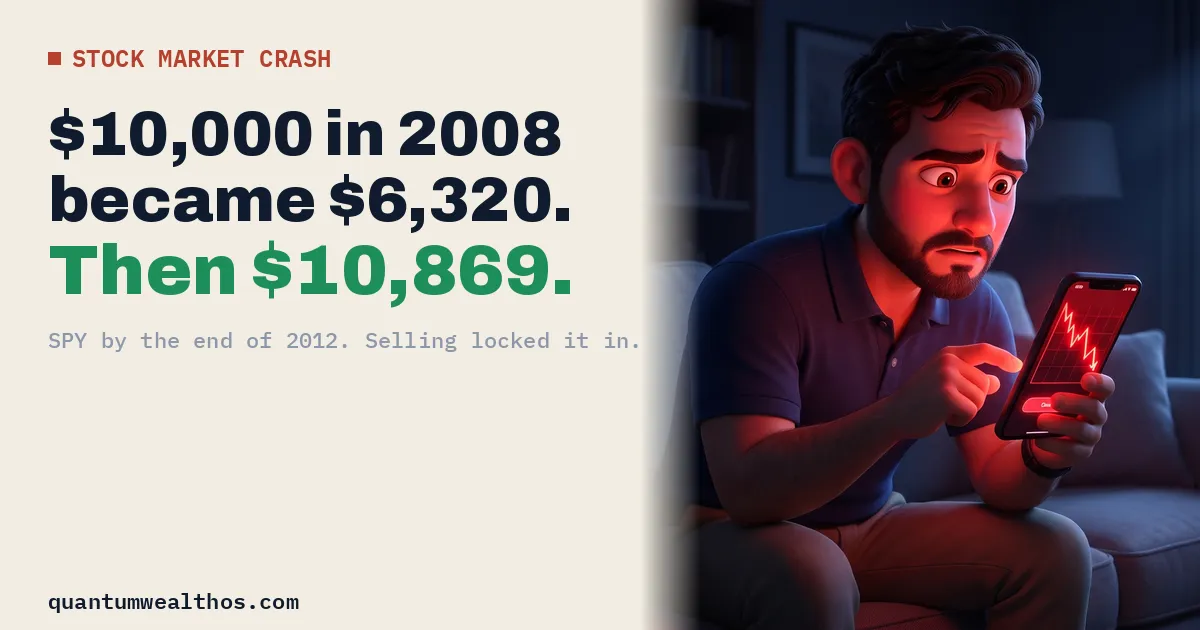
Stock market crash: what happened to $10,000 in 2008 and 2022
$10,000 in SPY (the S&P 500 fund) at the start of 2008 fell to $6,320, then got back to $10,869 by the end of 2012. Tech in 2022 recovered fast. QQQ in 2000 took 15 years. The real numbers, run through the calculator.
-
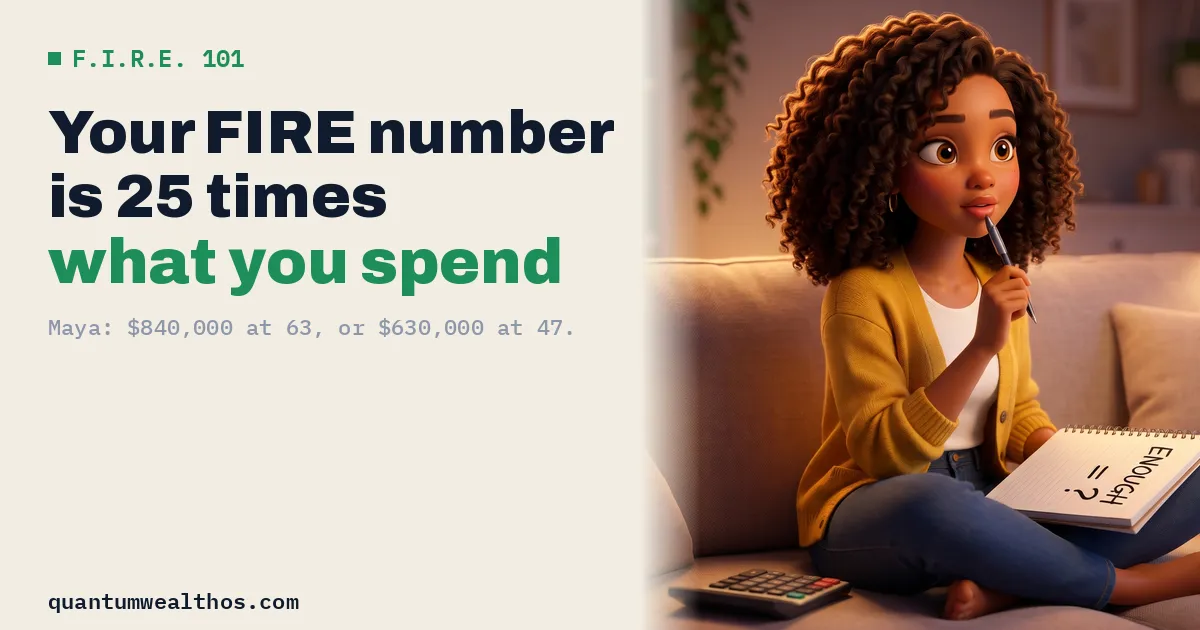
Your FIRE number and the 4% rule
Your FI number is 25 times what you spend in a year. Maya's is $840,000, reached at 63. Spending $2,100 a month instead drops it to $630,000, reached at 47. Then the Honest Check: 6% returns and a 3.5% rule.
-
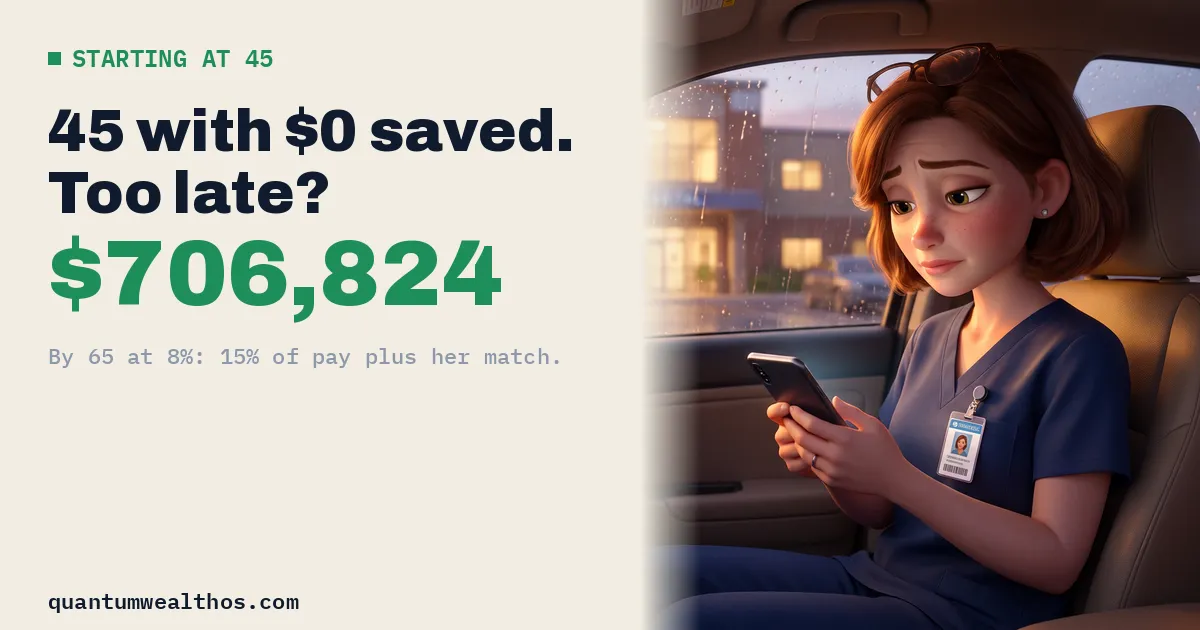
Starting at 45 with $0: is it too late to retire?
Denise is 45 with nothing saved. 15% of her pay plus her hospital's match could reach $706,824 by 65 at 8%, close to Marcus, who started at 35. Waiting five more years costs her $291,578.
-

The fee that eats your retirement
A 1% yearly fee takes $135,194 out of Marcus's $745,180, about 18% of his retirement. VOO's 0.03% takes $4,523. How fees compound, and how to find yours.
-

What's an ETF? Meet the 7 funds we use
An ETF is a basket of investments you buy with one ticker. Our seven funds, their fees, one job each, and why the last 10 years of returns are not a forecast.
-
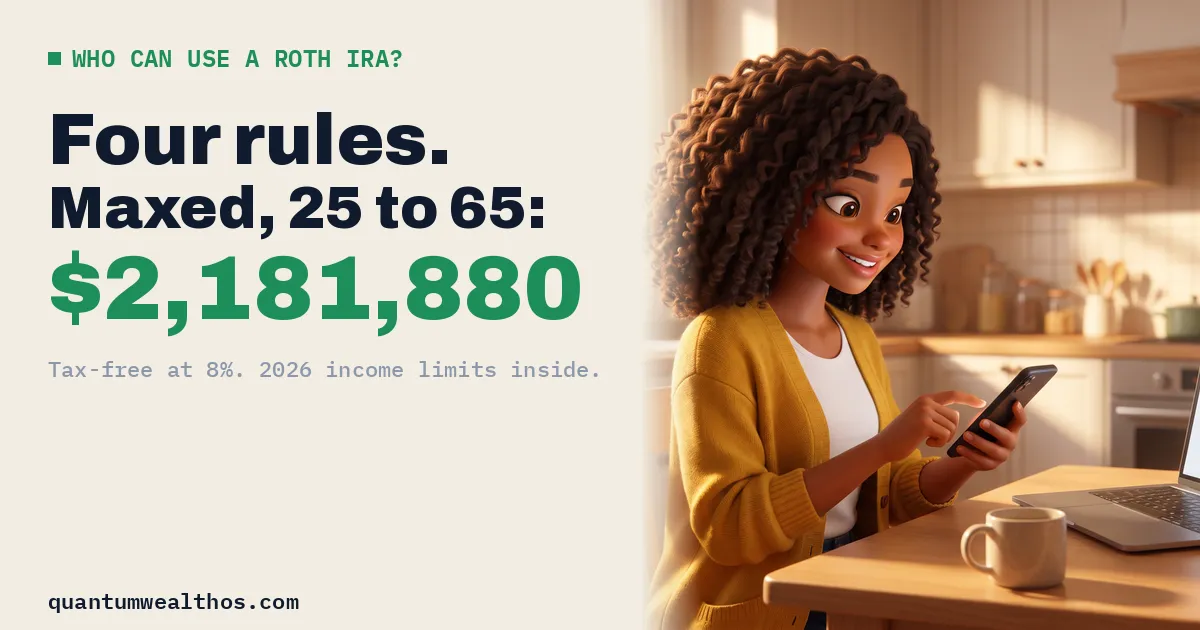
Who can contribute to a Roth IRA? Four rules
Earned income, the 2026 income limits, the spousal IRA and the backdoor Roth, plus what maxing a Roth from 25 to 65 could grow to: $2,181,880 tax-free at 8%.
-

401(k), traditional IRA or Roth IRA: which bucket first?
If your tax rate is the same now and later, traditional and Roth tie to the dollar. The real question is higher or lower later, plus a common order to fill them.
-
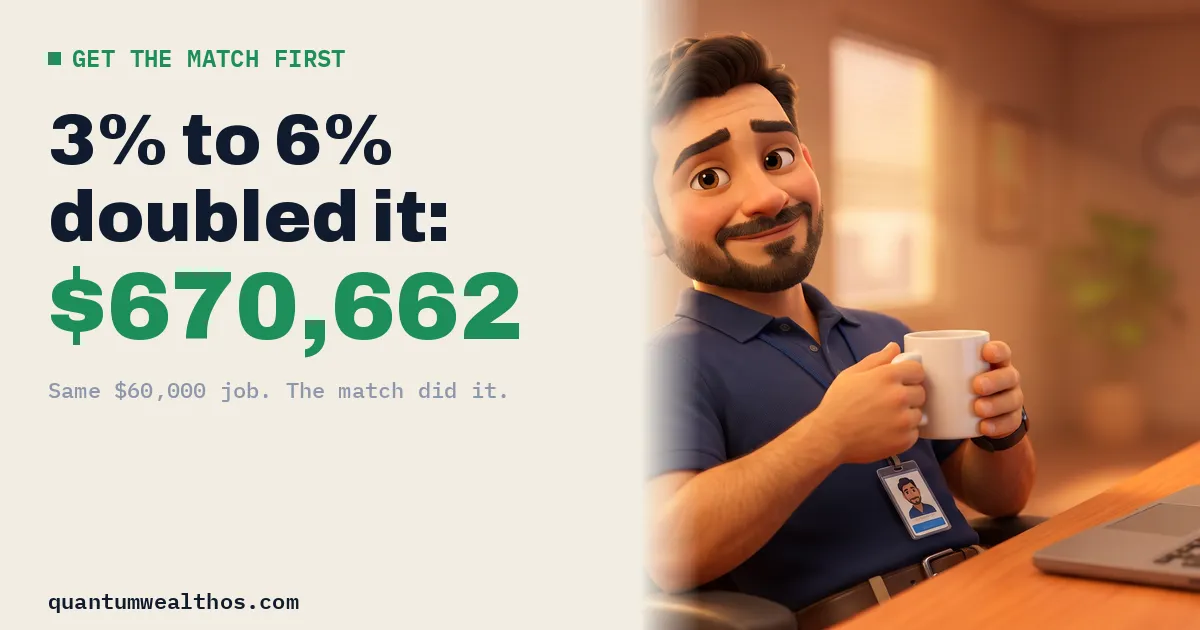
Get the 401(k) match first: the raise most people skip
Marcus moved his 401(k) from 3% to 6% and his balance at 65 doubled, from $335,331 to $670,662. Why the match is a 50% return on day one, and the catch.
-
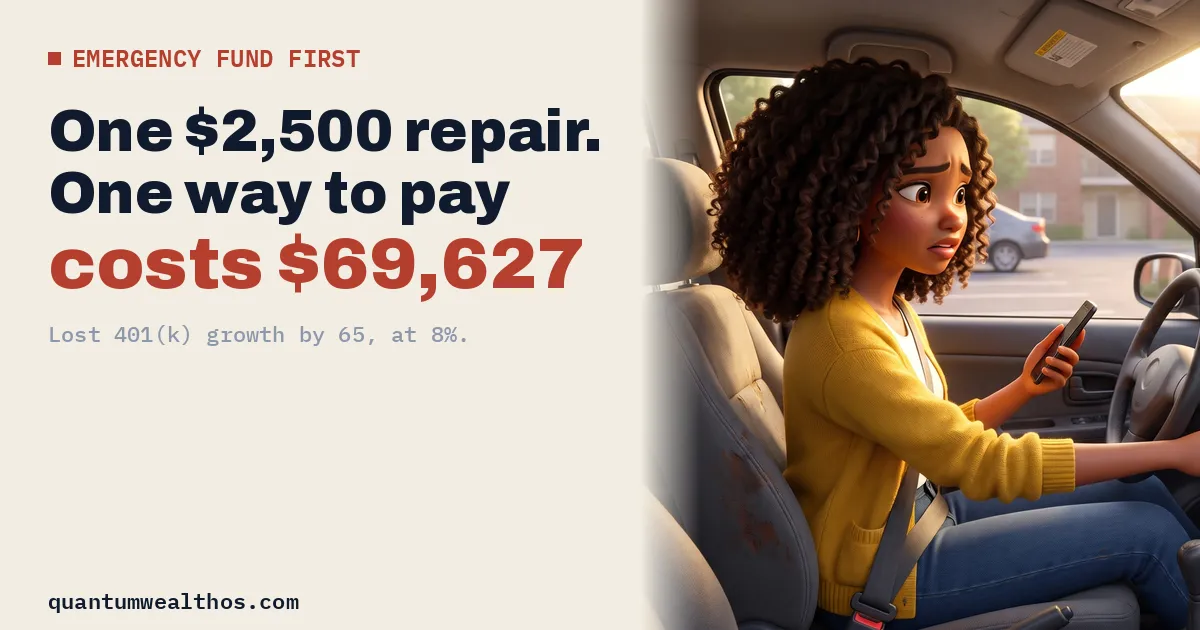
Emergency fund first: one $2,500 repair, four very different bills
Maya's car needs a $2,500 repair. A credit card, a 401(k) withdrawal, selling investments or savings? We ran all four. One quietly costs $69,627 by 65.
-
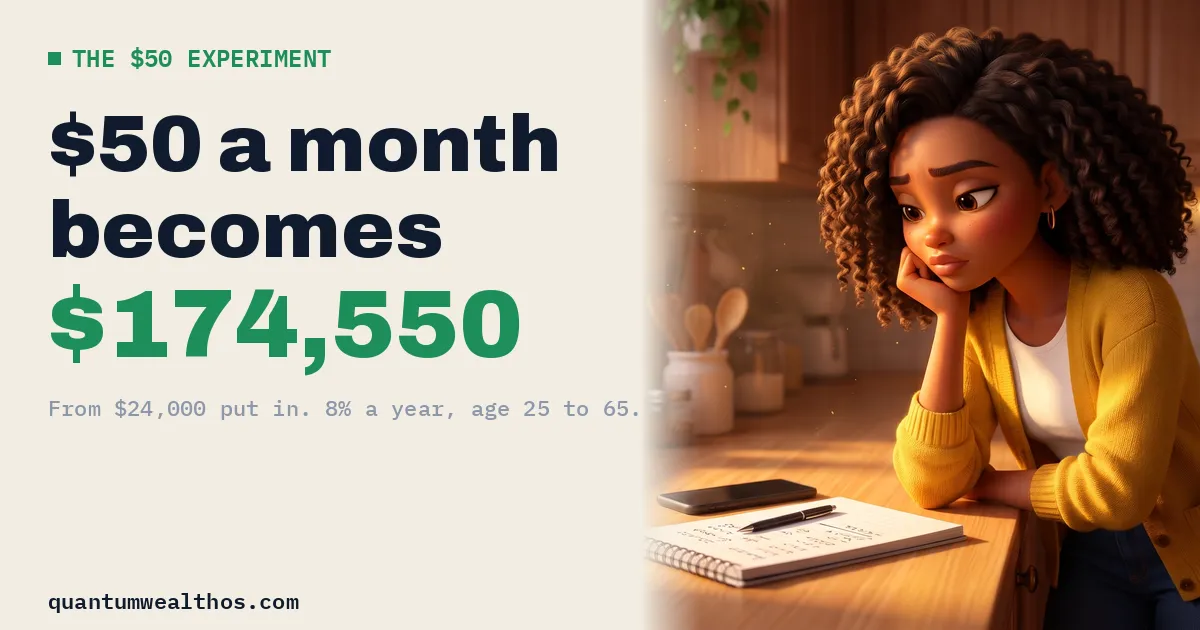
What $50 a month actually becomes
$50 a month from 25 to 65 grows to $174,550 at 8% from $24,000 put in. Here's why the first ten years feel slow, and the step-up that turns it into $942,664.
-
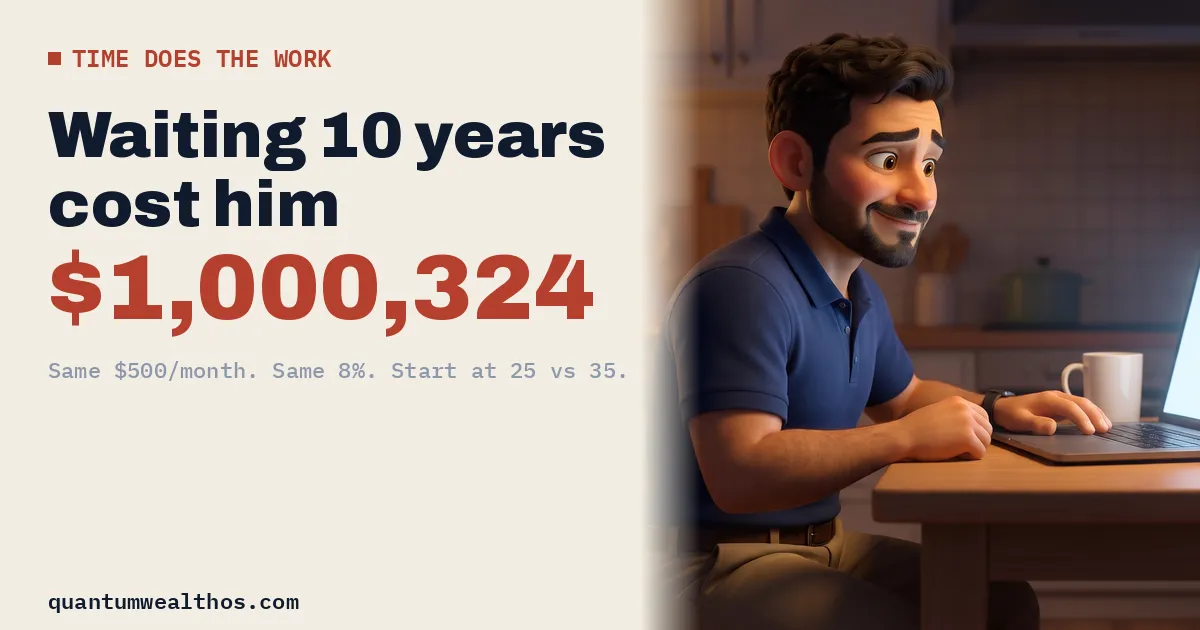
Waiting 10 years to invest cost him $1,000,324
Same $500 a month, same 8%. Starting at 25 instead of 35 ends with $1,745,504 instead of $745,180. The math, the twist, and the 6% Honest Check.
Save your plans. Track your net worth.
A free account keeps your saved scenarios, bookmarks and net worth in one place.
Questions people ask
- Are the calculators free?
- Yes. All 70 calculators are free, with no sign-up needed.
- Who runs Quantum Wealth OS?
- A CPA. Every number in our guides and videos comes from our own calculators, with the assumptions shown.
- Where can I watch the episodes?
- On our YouTube channel, youtube.com/@QuantumWealthOS. New episodes come out every week, and each one has a matching guide on the blog.
- Is this financial advice?
- No. It's education only. Examples use hypothetical returns (usually 8% a year, re-checked at 6% in our Honest Check), and real results vary.