




Marcus’s new job came with a $15,000 raise: $60,000 to $75,000. A year later, he’s saving less than before. He didn’t do anything crazy. That’s the problem.
Every upgrade felt earned
A nicer apartment. A newer car. More takeout, because he’s busy now. None of it felt big.

The numbers
| Before | Now | |
|---|---|---|
| Income | $60,000 | $75,000 |
| Spending | $48,000 | $64,000 |
| Savings rate | 20.0% | 14.7% |
His pay grew 25.0%. His spending grew 33.3%. The Lifestyle Inflation Detector calls the gap a “silent tax”: $4,000 a year.
Invested instead at the calculator’s 7%, that’s $55,266 in ten years. And Marcus is 40. From now to 65, $333 a month at 8% is $316,692. That’s what a raise he never felt really cost.
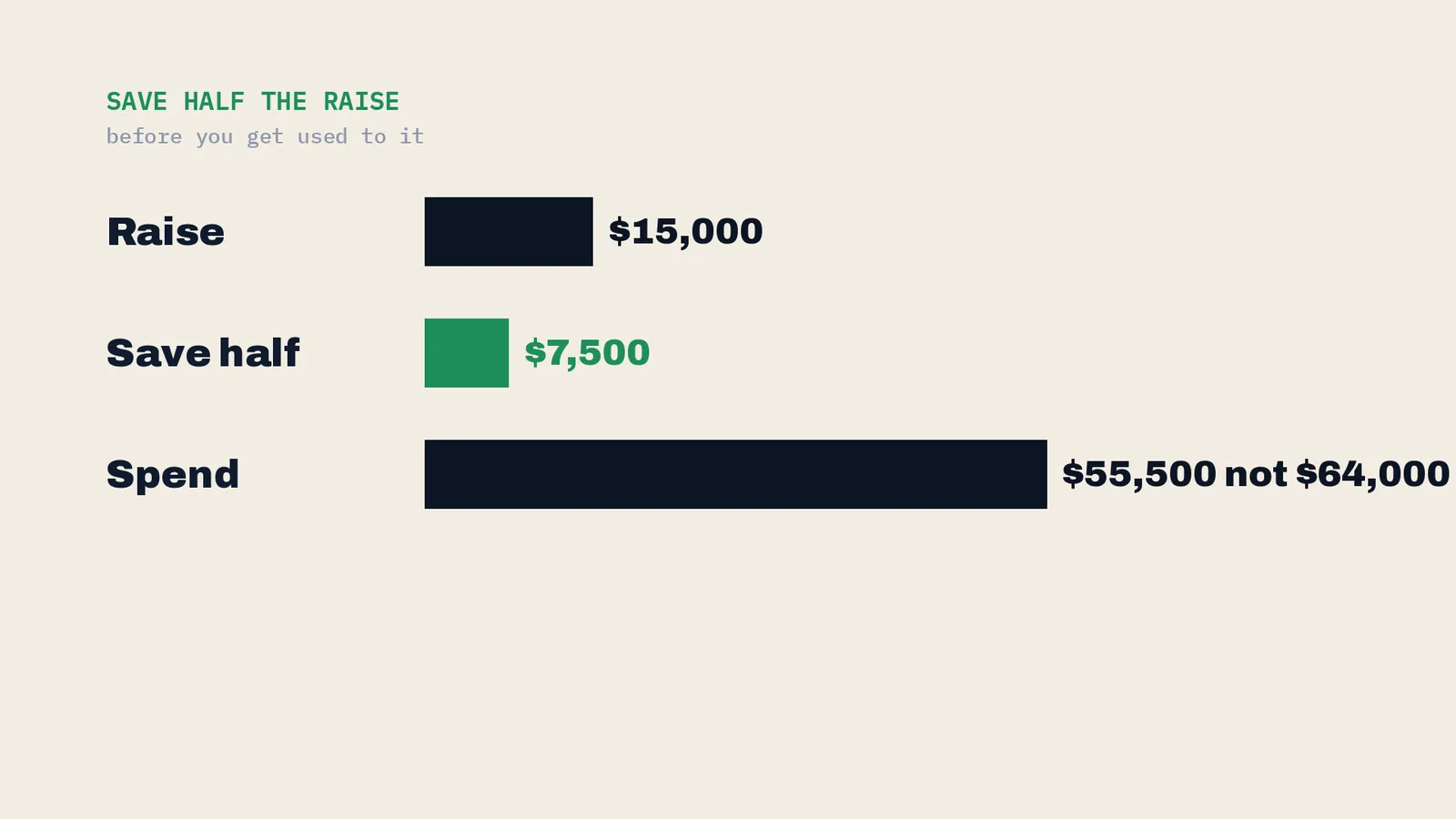
The simple fix: save half the raise
Half of $15,000 is $7,500. So he spends $55,500, not $64,000.
| Leakage | $0 |
| Savings rate | 26.0% |
He still got a better life. Just not all of the raise at once.
The Honest Check: 6%
| $333 a month, 40 to 65 | |
|---|---|
| At 8% | $316,692 |
| At 6% | $230,767 |
| He puts in | $99,900 |
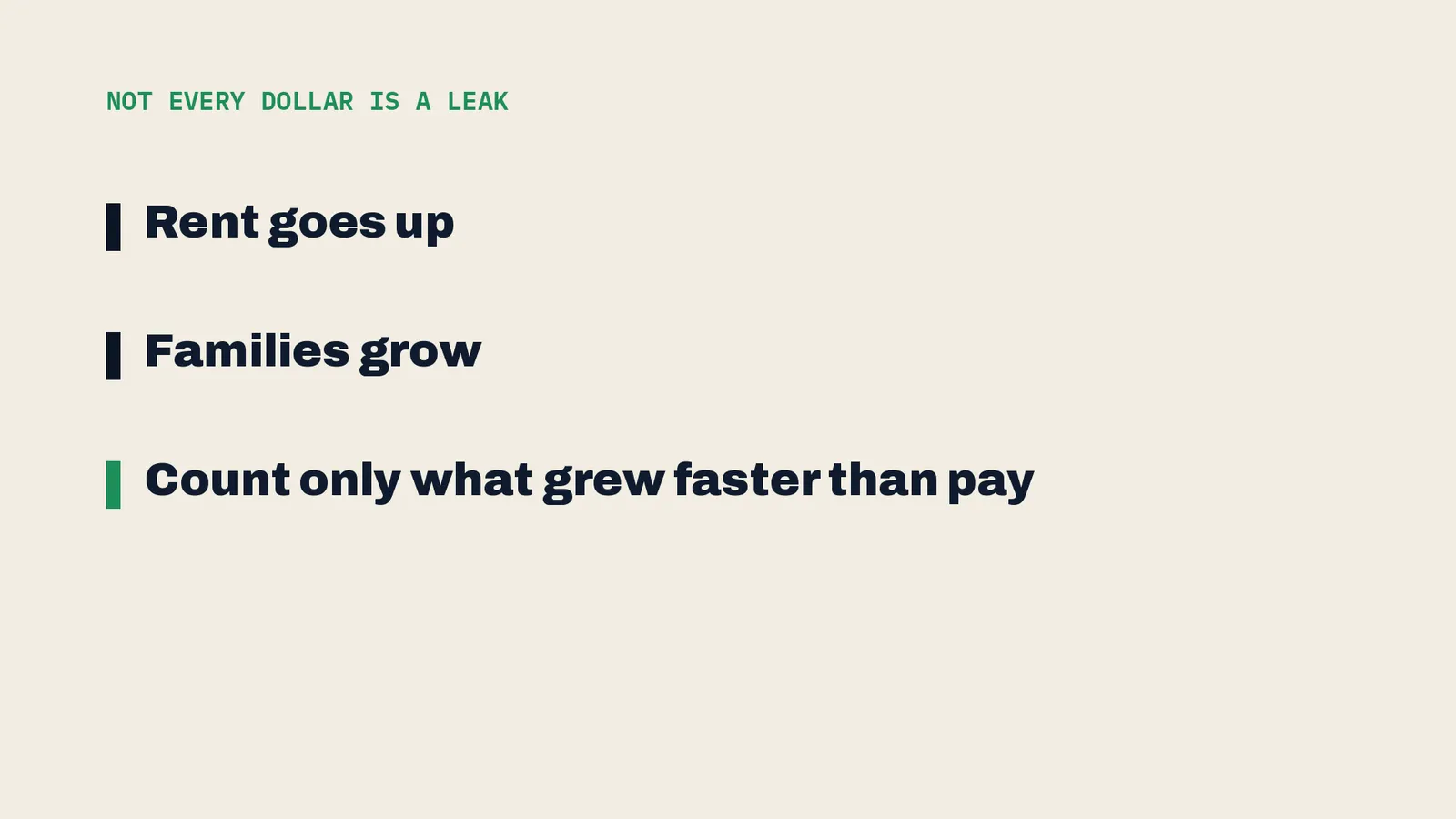
And not every dollar of new spending is a leak. Rent goes up. Families grow. The calculator only counts spending that grew faster than your pay, and so should you.
A raise is the easiest money you’ll ever save, because you never had it. Save half before it disappears.
Next up: some of Marcus’s extra spending went on a card. Now he has four debts. Snowball or avalanche?
How the math works
Growth, leakage, the 10-year figure (7%, added at year end) and savings rates come from the QWOS Lifestyle Inflation Detector ($60,000/$48,000 past, $75,000/$64,000 now; then $55,500). The $333 a month is $4,000 a year divided by 12, run in the QWOS Compound Interest Calculator for 25 years at 8% and 6%, monthly compounding.
Education, not financial advice. Hypothetical returns; real results vary and losses happen.