




Maya and Marcus both get their full 401(k) match now. But they each have more to invest. Where should it go? There are three buckets, and it all comes down to one question: pay the tax now, or pay it later?
The three buckets
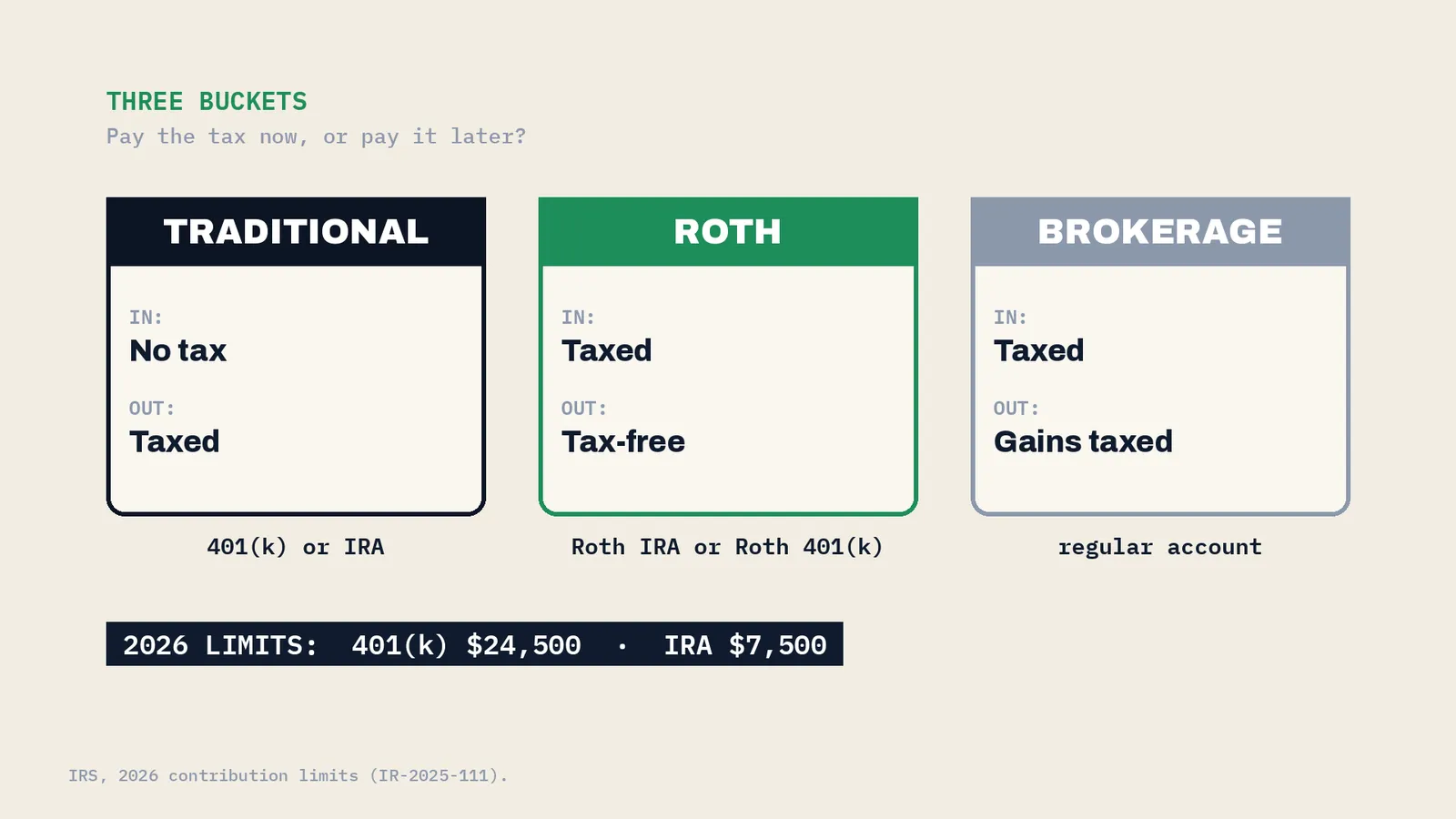
| Bucket | Going in | Coming out |
|---|---|---|
| Traditional 401(k) or IRA | No tax | Taxed |
| Roth IRA or Roth 401(k) | Taxed | Tax-free |
| Regular brokerage account | Taxed | Gains taxed along the way |
For 2026 you can put up to $24,500 in a 401(k) and $7,500 in an IRA.
The tie
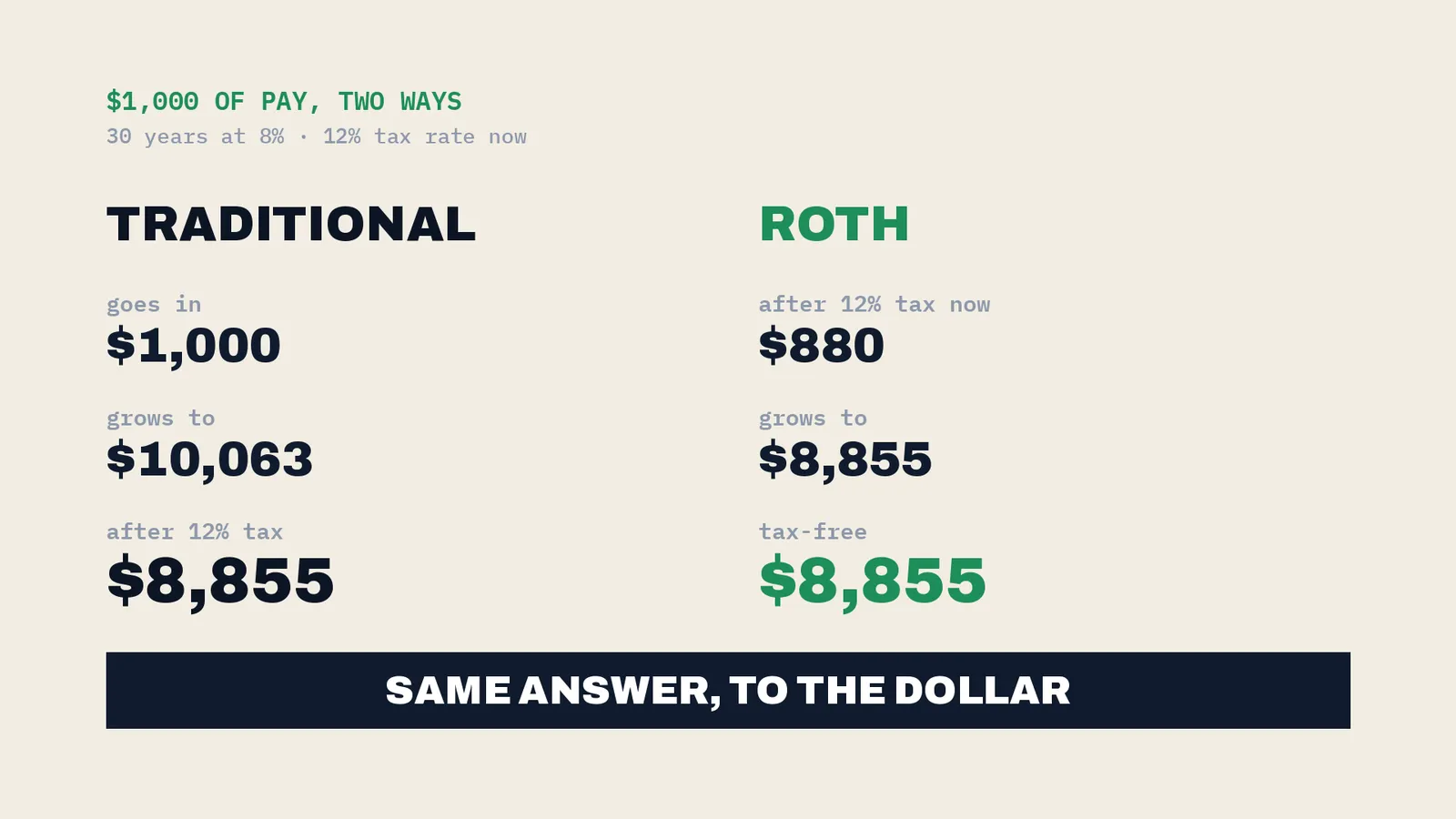
Run $1,000 of pay both ways for 30 years at 8%, with Maya in the 12% bracket:
| Goes in | Grows to | After tax | |
|---|---|---|---|
| Traditional | $1,000 | $10,063 | $8,855 (12% tax on the way out) |
| Roth | $880 (12% tax first) | $8,855 | $8,855, tax-free |
Same answer, to the dollar. If your tax rate is the same now and later, it’s a tie.
So who picks what?
The real question is whether your rate will be higher or lower later.
- Maya is 25, in a low bracket, and her pay should grow. That points to Roth. Her $500 a month from Episode 1, in a Roth IRA, grows to $1,745,504 by 65. Every dollar tax-free.
- Marcus isn’t sure where his rate will land, so he does both: his 401(k) stays traditional and his IRA goes Roth. Later, he can pick which bucket to spend from each year.
The Honest Check: “Roth always wins” isn’t true
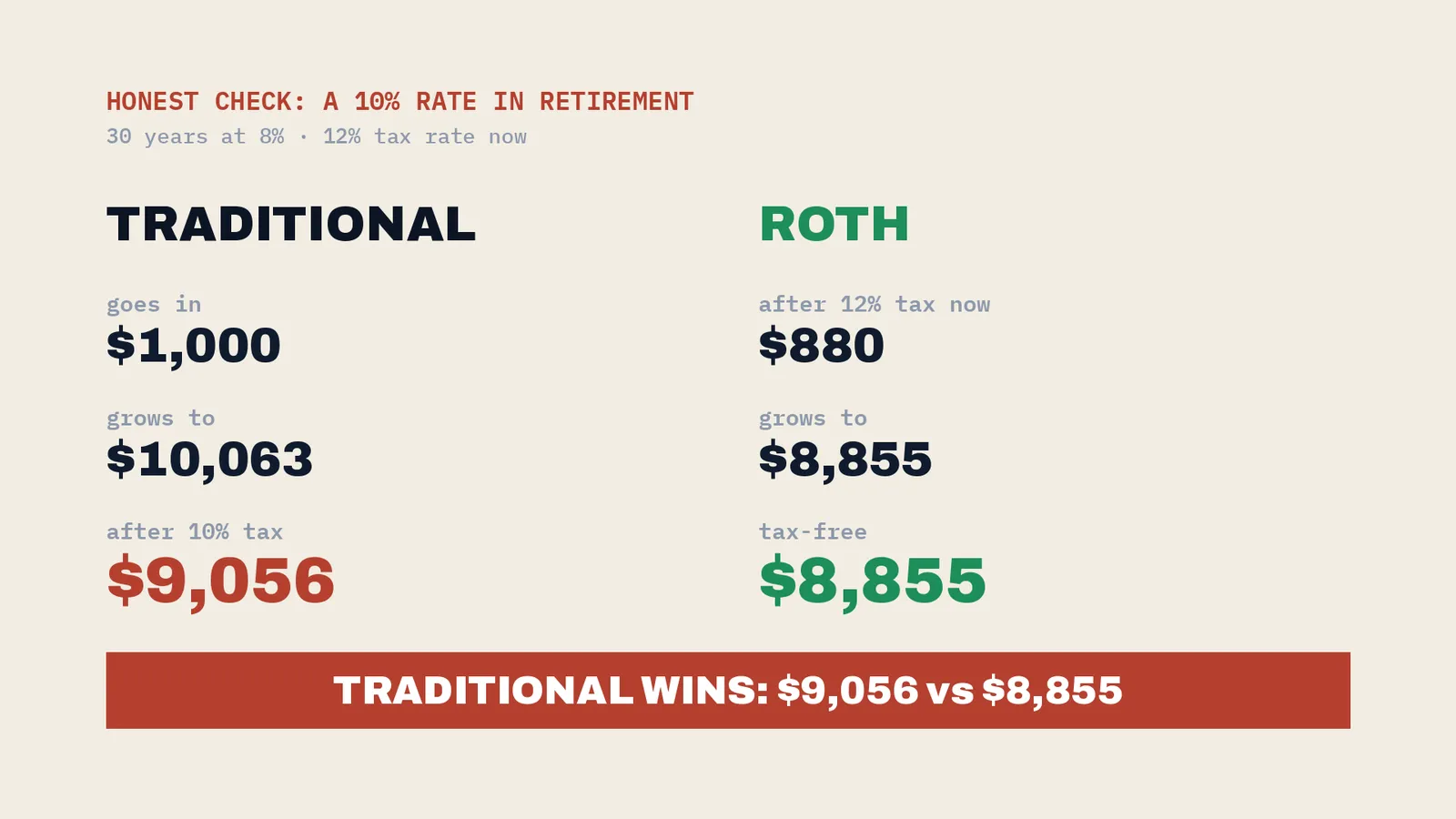
Rerun Maya’s $1,000, but give her a 10% rate in retirement. The traditional version keeps $9,056. The Roth keeps $8,855. Traditional wins. Nobody knows future tax rates, and that’s why a lot of people keep money in both.
A common order
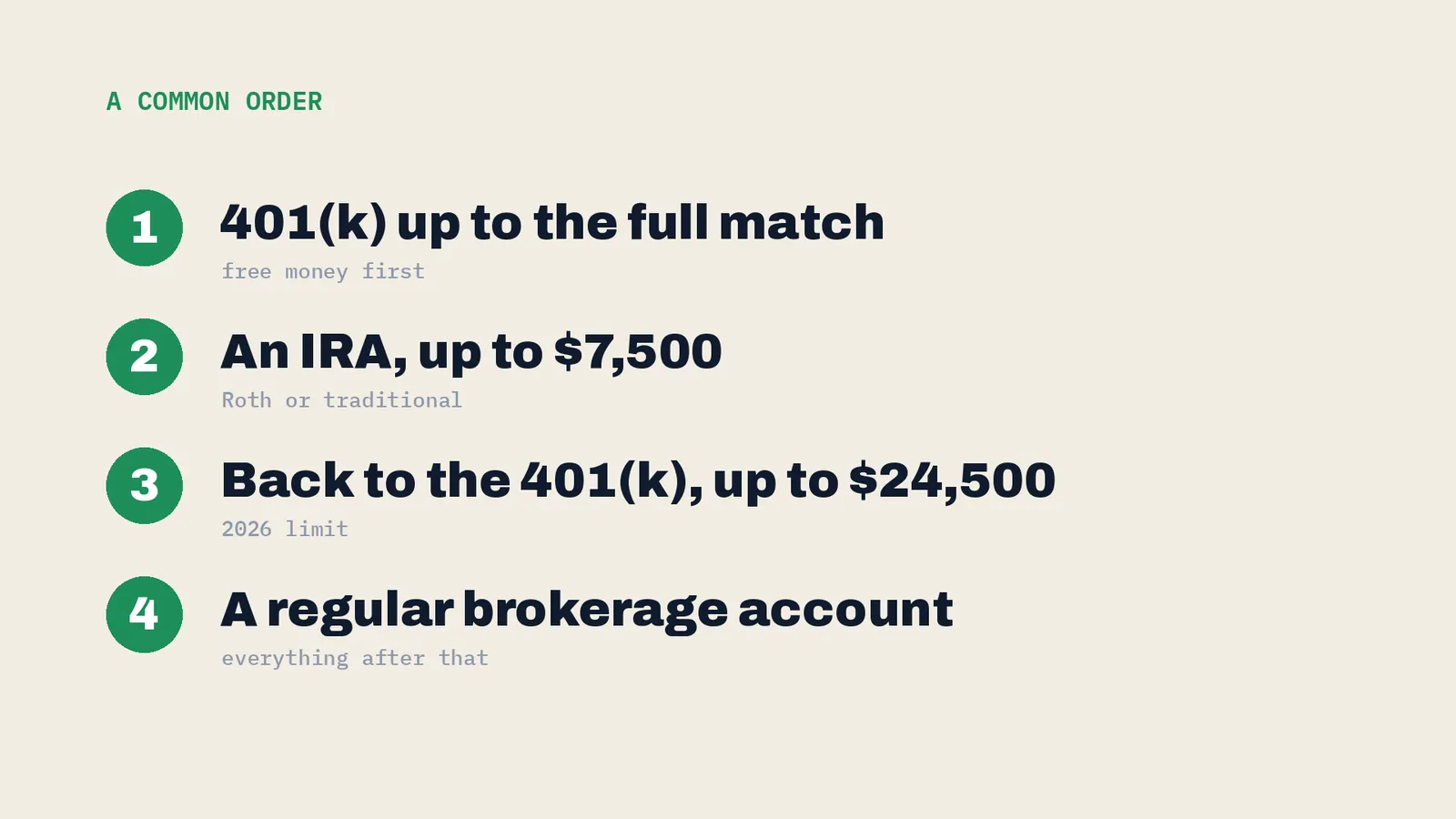
- 401(k), up to the full match
- An IRA (Roth or traditional), up to $7,500
- Back to the 401(k), up to $24,500
- A regular brokerage account
CPA Note from Daryl (tax year 2026). If you have a retirement plan at work, the traditional IRA deduction phases out for single filers between $81,000 and $91,000 of modified AGI. And Roth IRAs have income limits too. General information, not tax advice for your situation.
Next up: who’s allowed to put money in a Roth IRA, and the backdoor for everyone else. Who can contribute to a Roth IRA.
How the math works
The $1,000 example compounds once a year at 8% for 30 years (×10.0627). Maya’s Roth figure is $6,000 a year ($500 a month) from 25 to 65 at 8%, compounded monthly, matching the QWOS Roth IRA Calculator below.
Education, not financial or tax advice. Projections assume steady returns; real returns vary and can be negative.
Sources: IRS: 2026 limits and phase-out ranges · AARP: 2026 tax brackets