



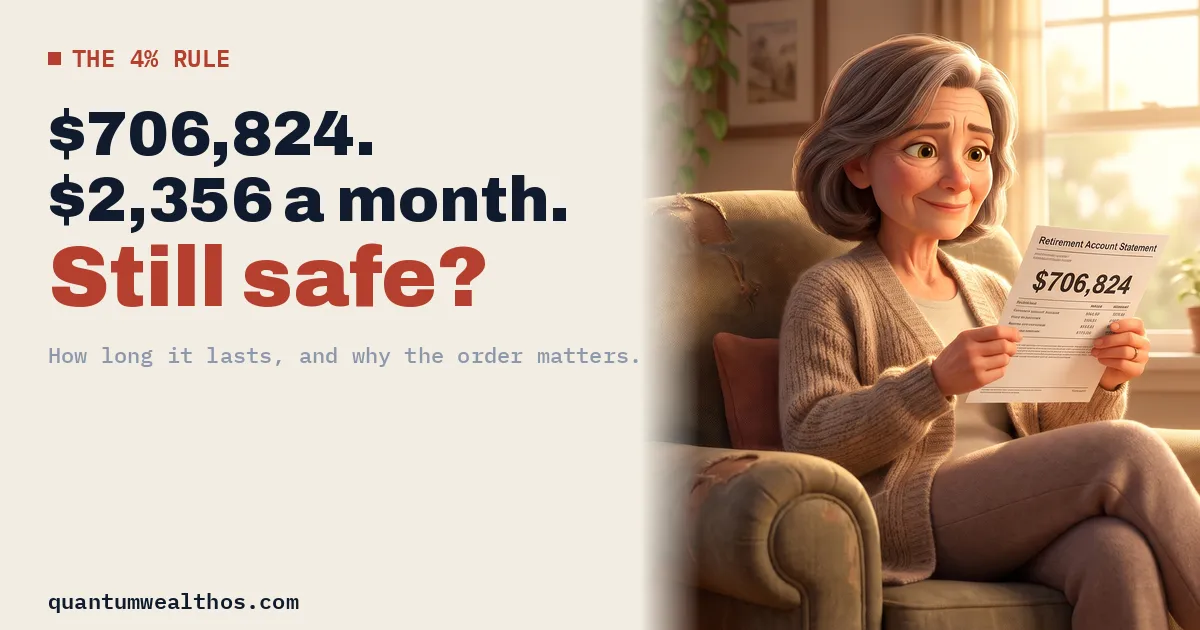
In Episode 9, Denise got to $706,824 by 65. Now the part nobody shows you: spending it. How much can she take every year without running out?
The 4% rule
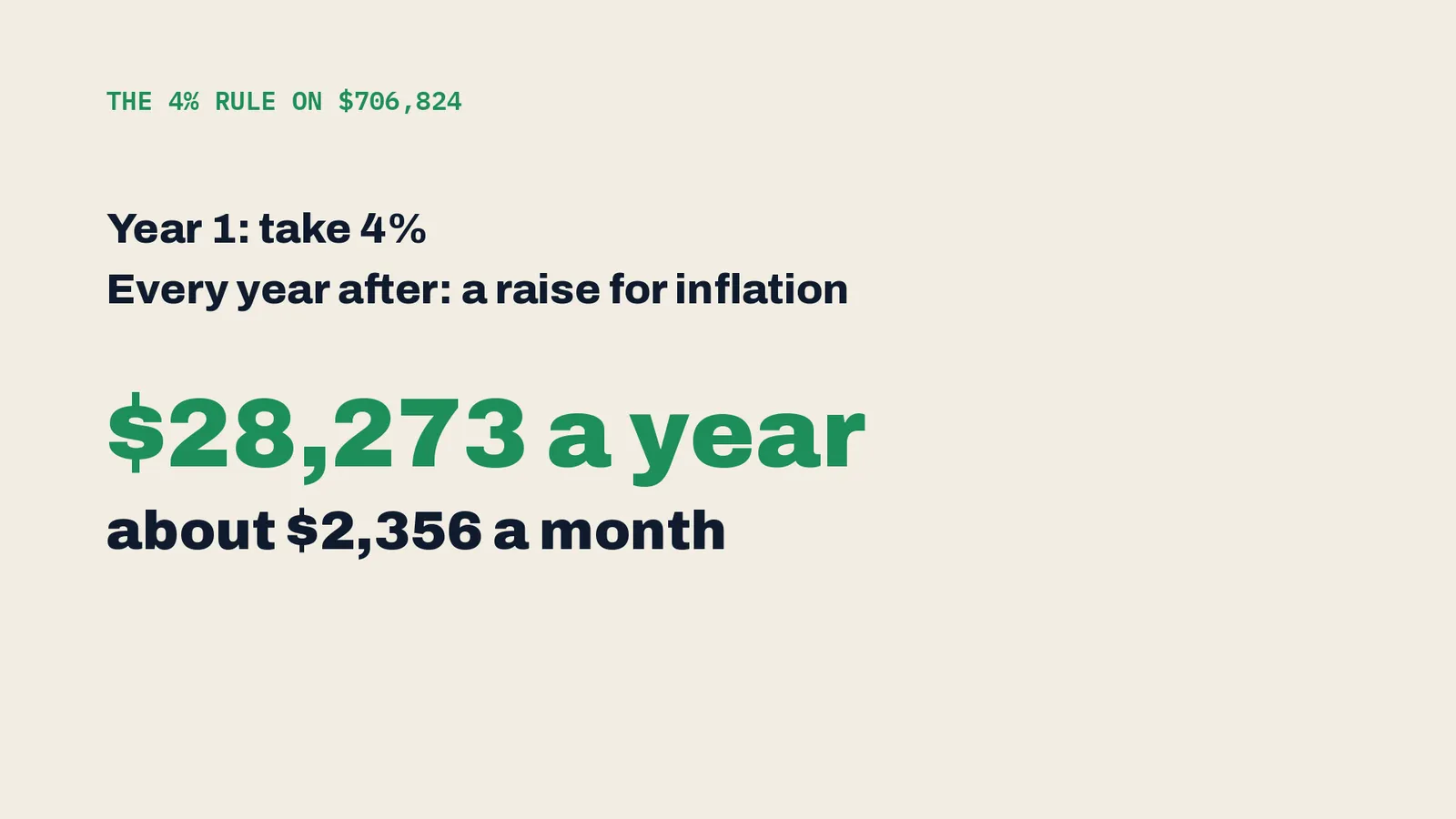
Take 4% the first year, then give yourself a raise for inflation every year after. 4% of $706,824 is $28,273 a year, about $2,356 a month.
How long it lasts
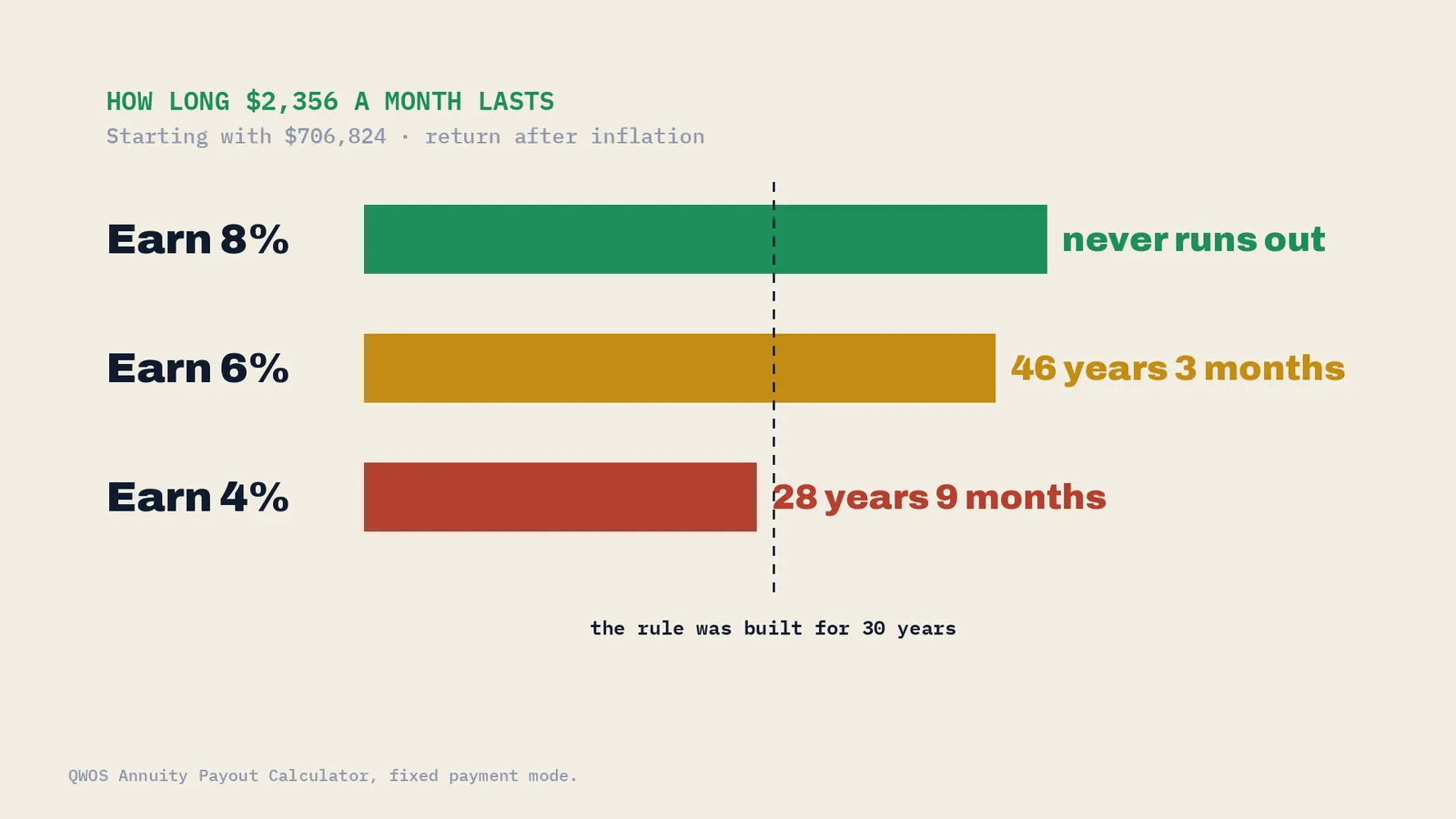
One trick for the calculator: since her withdrawals grow with inflation, we enter her return after inflation. Earn 8%, lose 3% to inflation: 5%.
| She earns | After 3% inflation | $2,356 a month lasts |
|---|---|---|
| 8% | 5% | Never runs out |
| 6% | 3% | 46 years 3 months |
| 4% | 1% | 28 years 9 months |
The rule was built to last 30 years, and that’s roughly what it does in a weak market.
The Honest Check: real returns jump around
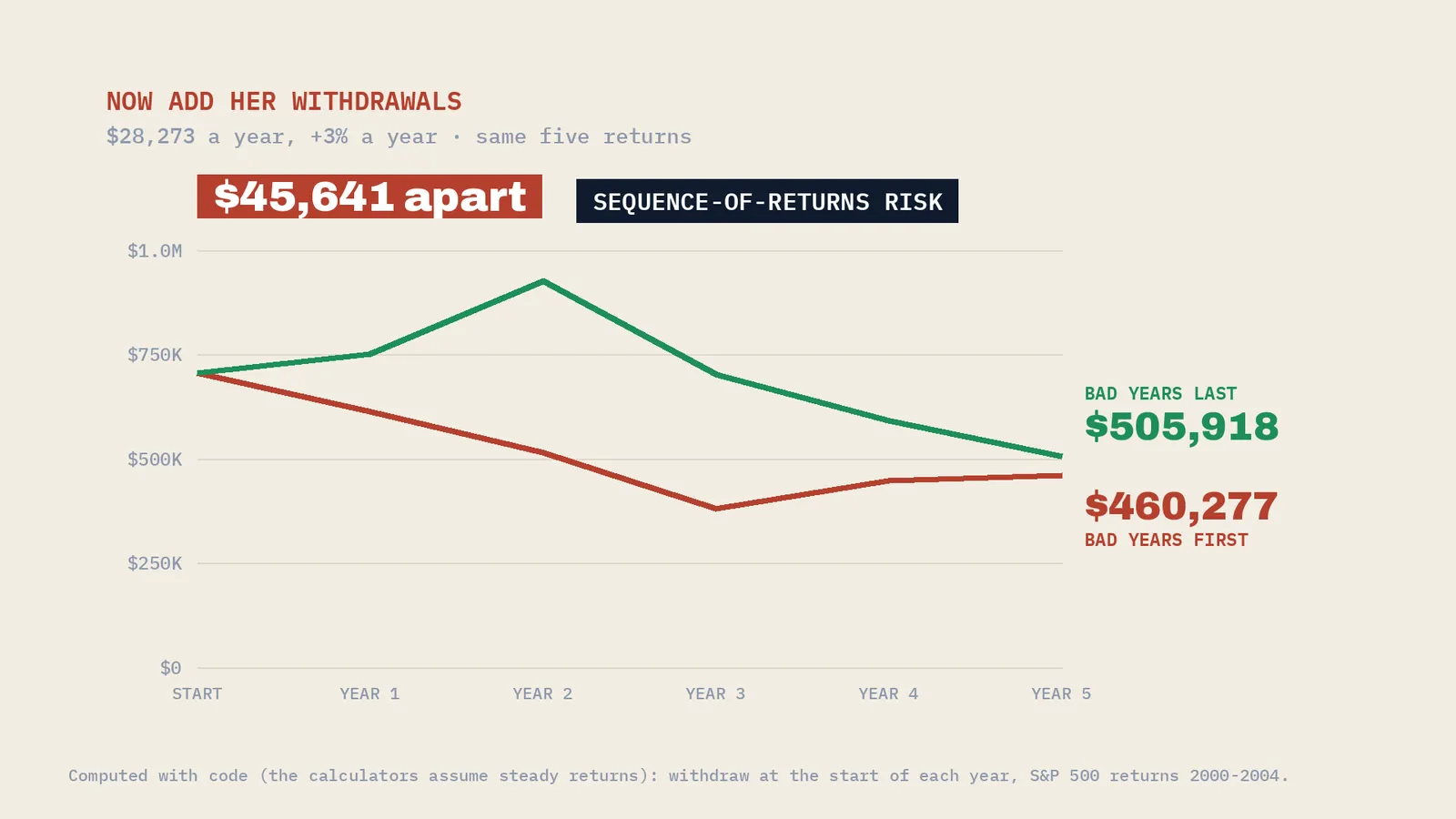
That calculator assumes the same return every year. Real markets don’t do that. Here are five real years of SPY, the S&P 500 fund, 2000 to 2004. Run them forward or backward: the same −2.39% a year either way.
Now add her withdrawals:
| Same five returns | After 5 years |
|---|---|
| Bad years first (2000→2004) | $460,277 |
| Bad years last (2004→2000) | $505,918 |
Same returns. $45,641 apart. That’s sequence-of-returns risk: a crash right after you retire hurts most, because you’re selling while prices are down.
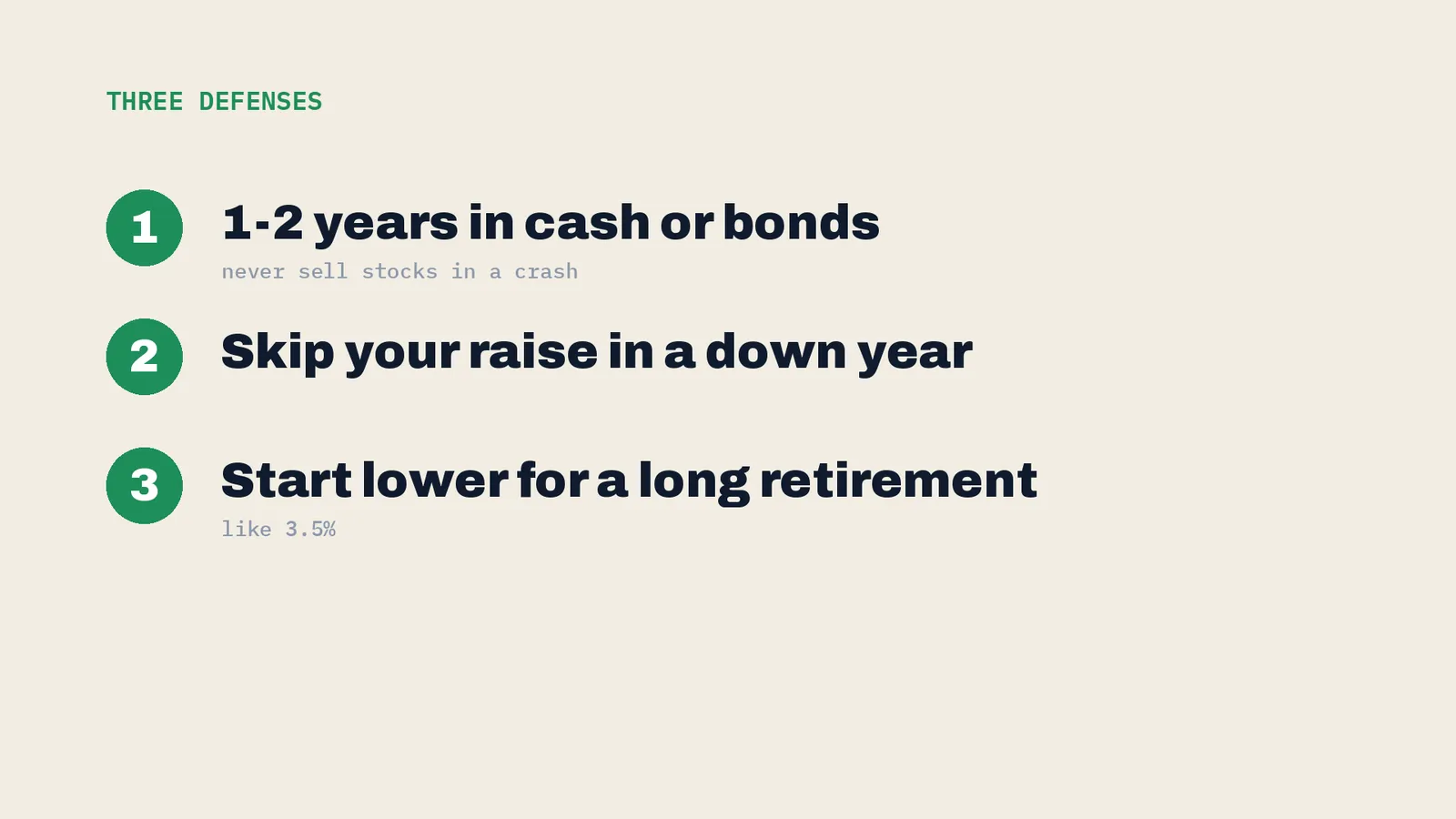
Three defenses
- Keep a year or two of spending in cash or bonds, so you never sell stocks in a crash.
- Skip your raise in a down year.
- For a long retirement, start a little lower, like 3.5%.
CPA Note from Daryl (tax year 2026). Money from a traditional 401(k) or IRA is taxed as income when it comes out, so $28,273 isn’t all spendable. Required minimum distributions start at 73 if you were born 1951 through 1959, or 75 if you were born in 1960 or later. General information, not tax advice for your situation.
Four percent is a starting point, not a promise. Run your number, then run the bad-years-first version too.
Next up: what if you didn’t have to wait until 65? Coast FIRE.
How the math works
“How long it lasts” uses the QWOS Annuity Payout Calculator below in fixed-payment mode ($706,824, $2,356 a month, return after inflation). The forward and reversed returns use the QWOS Average Return Calculator. The withdrawal comparison is computed with code, because the calculators assume steady returns: $28,273 taken at the start of each year and raised 3% a year, then that year’s SPY return (−9.7, −11.8, −21.6, 28.2, 10.7, or reversed).
Education, not financial advice. Past returns are not a promise; losses happen.
Sources: Nasdaq: RMD rules · Bengen (1994)